
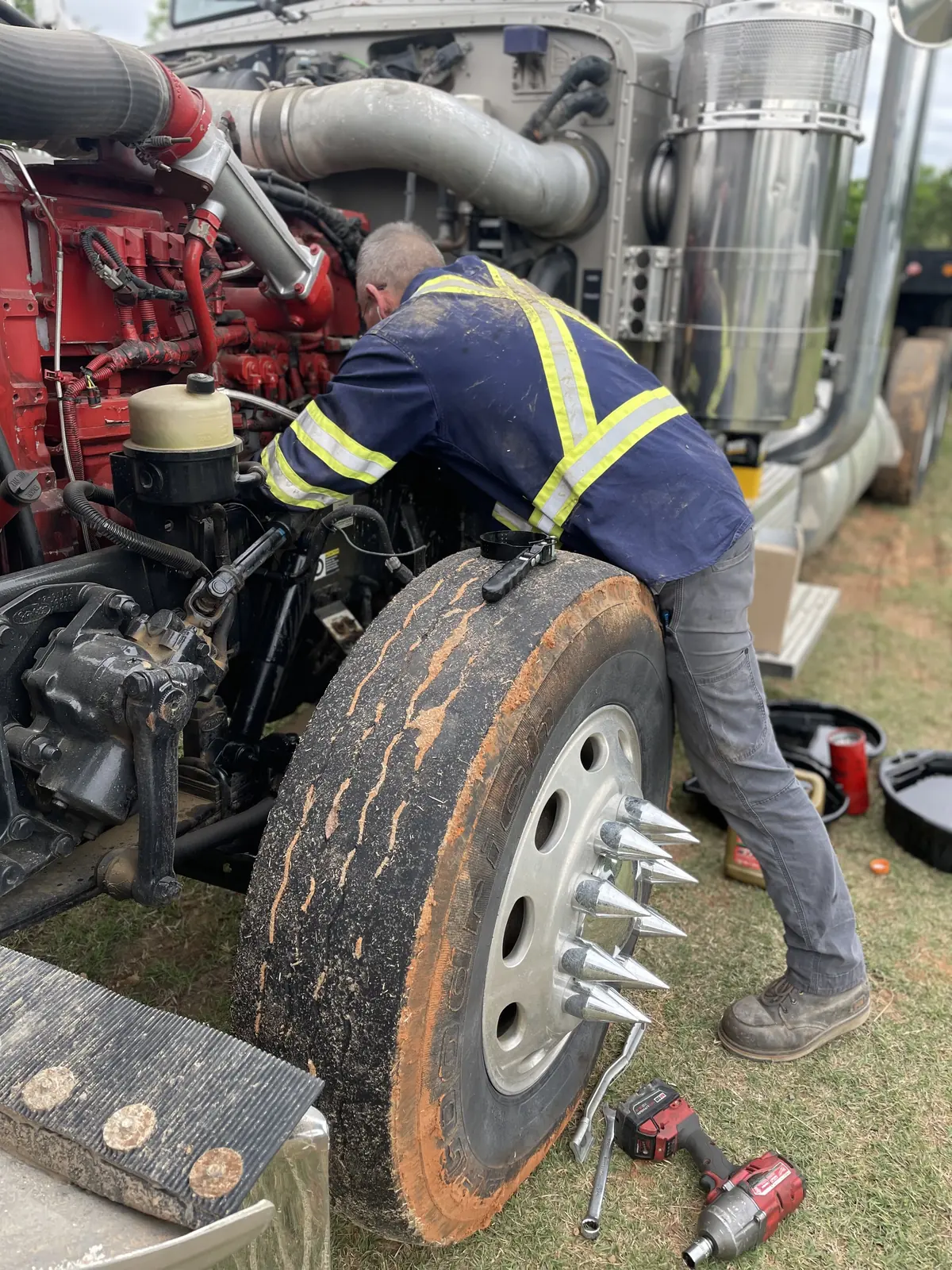
Diesel problems announce themselves the same way on a Cummins in a Peterbilt, a Powerstroke in a work pickup, or a Kubota in a skid steer: the engine starts hard, smokes the wrong color, loses power, throws a derate, or loses coolant. Each symptom points to a short list of causes, and a proper diagnosis walks that list in order instead of throwing parts at it. This guide maps symptoms to causes, explains what diagnosis involves, and covers when to have the mechanic come to the truck instead of the other way around.
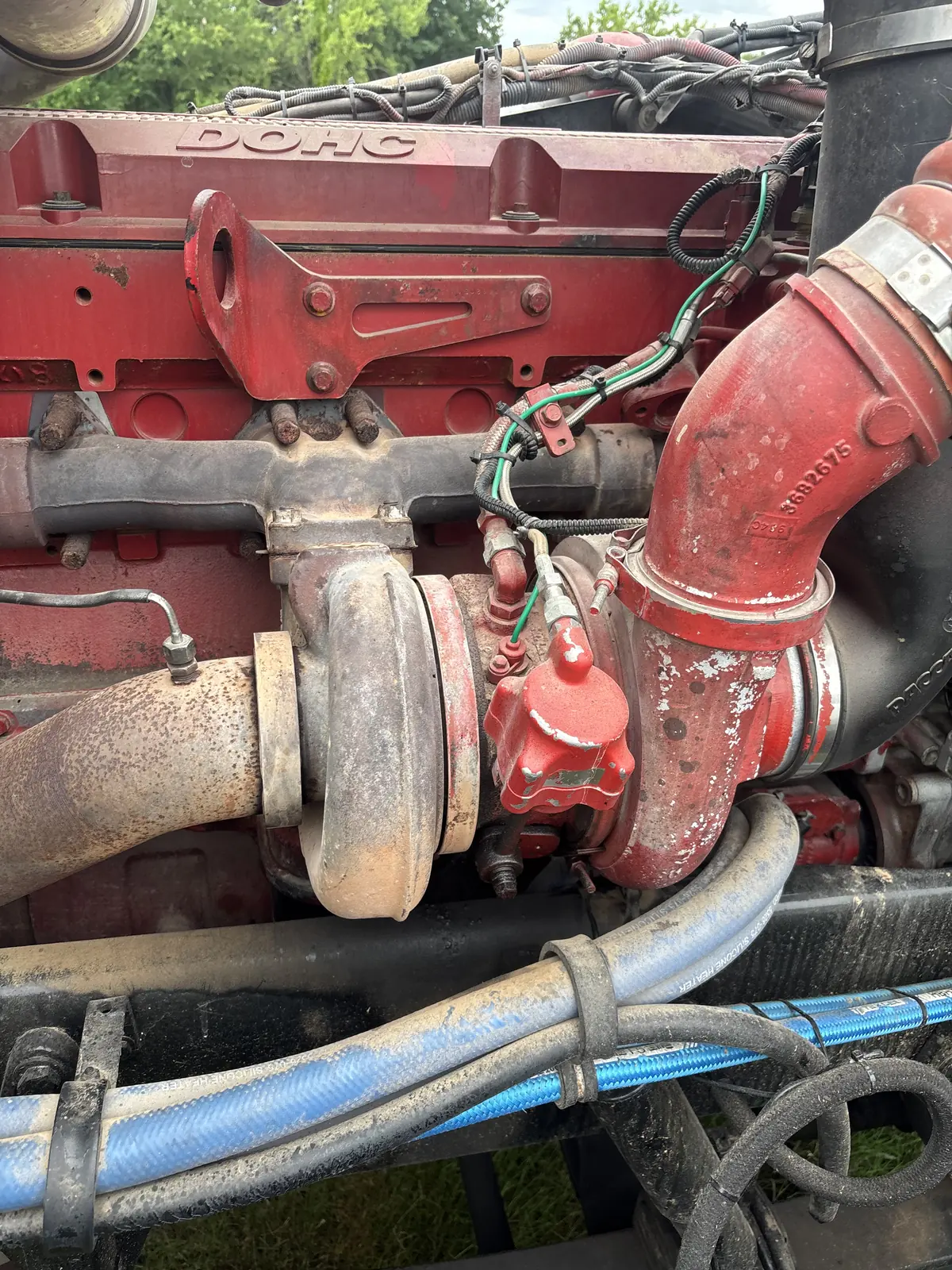
Diesel Symptoms and What They Usually Mean
| Symptom | Likely causes, roughly in order | What diagnosis involves |
|---|---|---|
| Hard start or long crank (cold) | Weak batteries, glow plug or grid heater circuit, gelled fuel, low compression, air in fuel | Battery load test, cranking rpm, glow/grid heater current draw, fuel pressure, relative compression through the scan tool |
| Hard start when hot | Suction-side air leak, failing lift pump, injector return leak, weak high-pressure oil (HEUI engines) | Fuel pressure hot vs. cold, clear-hose test for air, injector return volume, ICP/IPR readings on 7.3 and 6.0 Powerstrokes |
| No start, cranks normally | No fuel (plugged filter, failed pump, empty tank with a lying gauge) or no command (crank/cam sensor, ECM power and ground) | Confirm fuel at the rail, scan for crank and cam signal, check ECM fuses and grounds |
| White smoke | Unburned fuel from low compression or timing when cold; coolant if it smells sweet (head gasket, EGR cooler, injector cup) | Smell it. Coolant level trend, block test for combustion gas, cylinder balance test, EGR cooler pressure test |
| Black smoke | Too much fuel or not enough air: restricted air filter, boost leak, stuck EGR, turbo not building boost, over-fueling injector, plugged DPF | Air filter restriction, boost vs. commanded, boost-leak test, EGR position, DPF differential pressure |
| Blue smoke | Oil burning: turbo seals, valve stem seals, worn rings, over-full crankcase, CCV failure | Oil level (too high is a clue), pull the intake off the turbo and look for oil, crankcase pressure |
| Loss of power, no codes | Restricted fuel or air filter, boost leak, exhaust restriction, slipping clutch or converter, dragging brakes | Fuel pressure and boost under load, exhaust back-pressure, road test with live data |
| Derate or power limit | Aftertreatment: DEF quality or level, NOx sensor, DEF doser, high soot load; or over-temp, low oil pressure, a sensor fault the ECM protects against | Codes on OEM software, SPN/FMI on J1939 trucks, soot load, DEF concentration with a refractometer, inducement timer status |
| High crankcase pressure | Worn rings or liners, cracked piston, plugged CCV filter, turbo seal | Manometer at the dipstick or fill cap, cylinder leak-down, oil analysis for fuel dilution and metals |
| Coolant loss, no visible leak | EGR cooler, head gasket, injector cup or sleeve, oil cooler, heater core, pressure cap | Pressure test cold and hot, block test, oil condition, coolant in the exhaust or a boiling degas bottle |
What a Real Diagnosis Looks Like
Codes are where diagnosis starts, not where it ends. A P0087 (low fuel rail pressure) doesn't say "replace the high-pressure pump"; it says the rail can't hold commanded pressure, and the cause could be a plugged filter, a leaking injector, a failing pressure regulator, or a pump. Working it in order looks like this:
- Talk to the operator. When does it happen: cold, hot, loaded, uphill, after a fill-up? What changed recently?
- Pull codes on OEM-level software (Cummins INSITE, Ford IDS/FDRS, CAT ET, Detroit DiagnosticLink, or a multi-brand J1939 tool). Note active vs. inactive, freeze-frame data, and counts.
- Look at the live data that matters for the complaint: fuel pressure, boost, EGR position, exhaust temps, DPF differential pressure, injector balance, coolant and oil temps.
- Test, don't assume. Boost-leak test, fuel-pressure gauge on the rail, block test for combustion gas, crankcase pressure. Ten minutes with a gauge saves a four-figure part.
- Fix the cause, then verify with the same live data on a road test, and clear codes only once the fix is proven.
The diagnostics page covers what a mobile diagnostic visit includes.
Common Diesel Repairs by Engine Family
- Cummins ISX / X15: EGR cooler and valve, turbo actuator, injector cups, aftertreatment sensors, rocker housing leaks. See Cummins repair.
- Ford Powerstroke: 6.0 oil cooler and EGR cooler, FICM, head gaskets; 6.7 CP4 pump contamination, turbo, EGT sensors. See Powerstroke repair.
- Detroit DD13/DD15: one-box aftertreatment, DEF dosers, fuel system (the "two-filter module"), turbo, EGR.
- Kubota, Yanmar, Deutz in equipment: fuel contamination from jobsite tanks, cracked fuel lines, cooling packs packed with dust, injection pump timing on the older mechanical engines.
- Sprinter OM642 / OM651: oil cooler seals, swirl flap motor, glow plug modules, DEF heater. See Sprinter repair.
When a Mobile Diesel Mechanic Is the Right Call
Most diagnosis, and most repairs short of major engine or transmission work, can be done where the unit sits. A mobile mechanic makes sense when:
- The unit is a no-start: it can't be driven anyway, and a tow costs more than the service call
- The problem is electrical, fuel, cooling, brakes, belts, hoses, wheel ends, or aftertreatment: all roadside-serviceable
- The equipment doesn't travel on the road at all (excavators, forklifts, lifts, tractors)
- Several units in a yard are due for PM
- A derated truck can limp to a safe spot but not across town at 5 mph
Work that genuinely needs a bay: in-frame overhauls, head gaskets on most heavy-duty engines, transmission and clutch removal on Class 8, and off-truck DPF cleaning. A good mobile mechanic diagnoses first, then tells you which category the job falls into. The mobile mechanic page covers how a call works.
Seasonal Diesel Problems Around Tulsa
Summer (June through September)
Stretches over 100°F push every cooling system to its limit. Overheating under load, A/C compressor and condenser failures, DEF degrading in a hot tank, and batteries that quietly lose capacity to heat and then fail in October. Trucks that idle for hours at the Port of Catoosa or in a loading lane on I-244 don't get the airflow to cool; watch fan clutches and radiator cleanliness.
Winter cold snaps
Northeast Oklahoma doesn't stay cold, which is the problem: fleets forget until the first sub-20°F morning. Untreated No. 2 diesel gels, DEF freezes at 12°F (the tank heater handles it once the engine runs, but a frozen DEF line can set codes), weak batteries won't crank a cold engine, and block heaters that were never plugged in. Grid heaters and glow plugs get their first real test of the year. Ice storms strand units on the shoulder, so see the emergency repair page before you need it.
Spring rain and mud
Water in fuel from condensation in tanks and jobsite fuel trailers, corroded connectors, and equipment stuck in red clay. Drain water separators daily when it's wet.
Dust year-round
Red-clay dust and gravel on rural, farm, and lease roads pack radiators, plug air filters, and chew up seals. Air filter restriction gauges are worth checking weekly on equipment that works dirt.
FAQ
Why does my diesel smoke white only when cold?
Unburned fuel because the cylinder isn't hot enough to light it completely. A little on a cold morning is normal; a lot, or white smoke that continues after warm-up, points to low compression, a glow plug or grid heater circuit that isn't working, or injection timing.
What does a derate mean?
The engine computer is limiting power or speed on purpose because a monitored system is out of spec, most often aftertreatment or DEF. It's a countdown: fix the fault and the ECM will restore power, ignore it and it escalates toward a 5 mph limit.
Can bad fuel cause all of this?
A lot of it. Water and contamination from a jobsite tank plug filters, damage high-pressure pumps and injectors, and cause hard starts, power loss, and smoke. When a problem shows up right after a fill-up, start at the fuel.
Need Diesel Repair On-Site in Tulsa?
Tulsa Fleet Repair is a mobile operation — the service truck comes to your yard, jobsite, or breakdown location anywhere within 120 miles of Tulsa, with 24/7 emergency response when a unit can't wait. Call (918) 925-9356 or request service online.