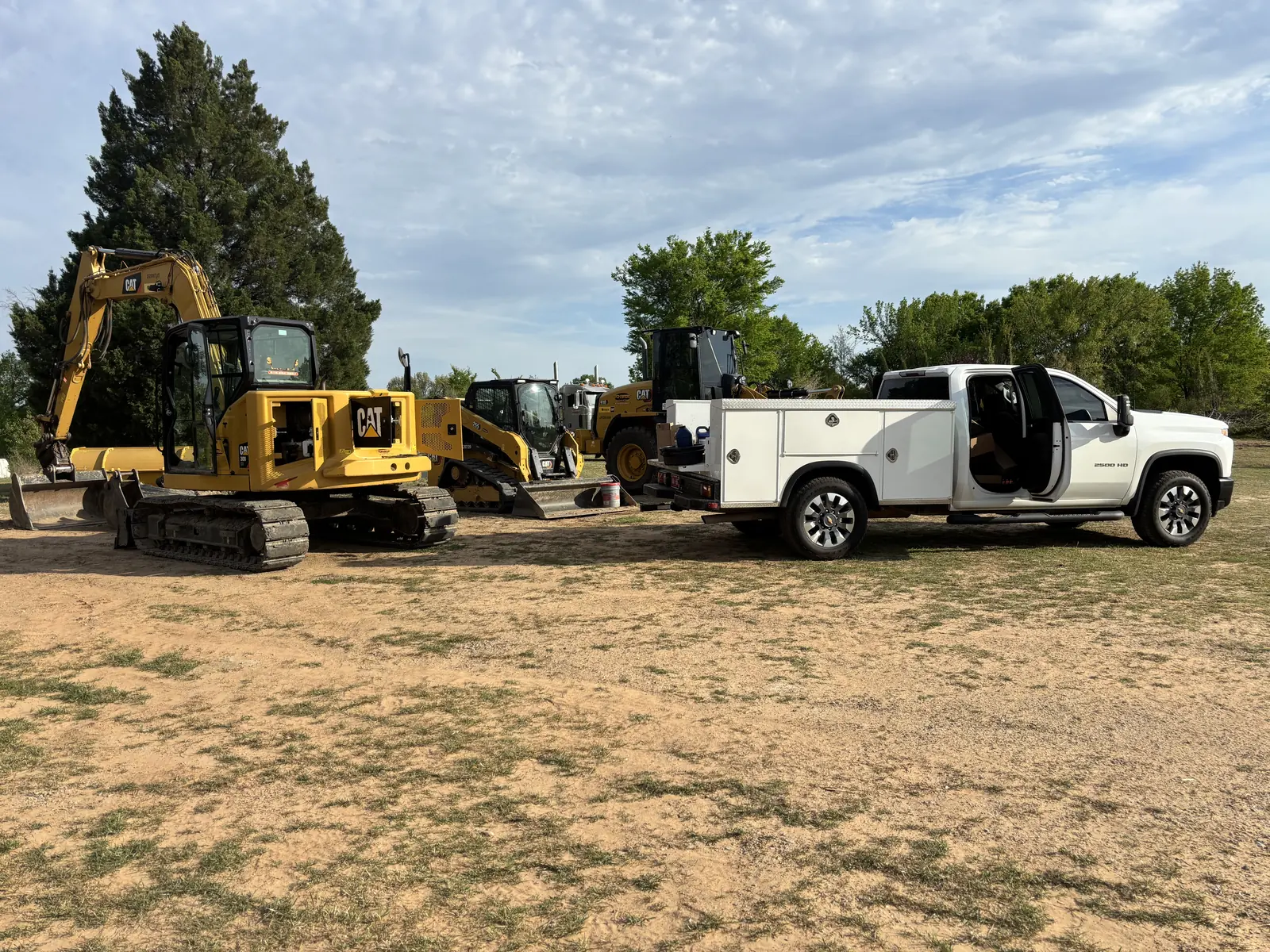
Nobody can tell you what an hour of downtime costs your fleet, because it depends on what that unit earns, who is standing around while it is down, and what you have to rent or pay to cover for it. What you can do is compute your own number from five inputs in about ten minutes. That number is what tells you whether a PM program, a spare unit, or a mobile mechanic pays for itself.
The Formula
Work in unit-days first, then divide down to hours. For one unit that is down unexpectedly:
Downtime cost per day = Lost revenue or production + Wages still paid + Replacement rental + Penalties + Catch-up overtime
Add any one-time costs of the event on top: the tow or transport, expedited parts, and the difference between an emergency call and a scheduled one. Then:
Cost per hour = Cost per day ÷ Working hours in the day
The five inputs and where to find them
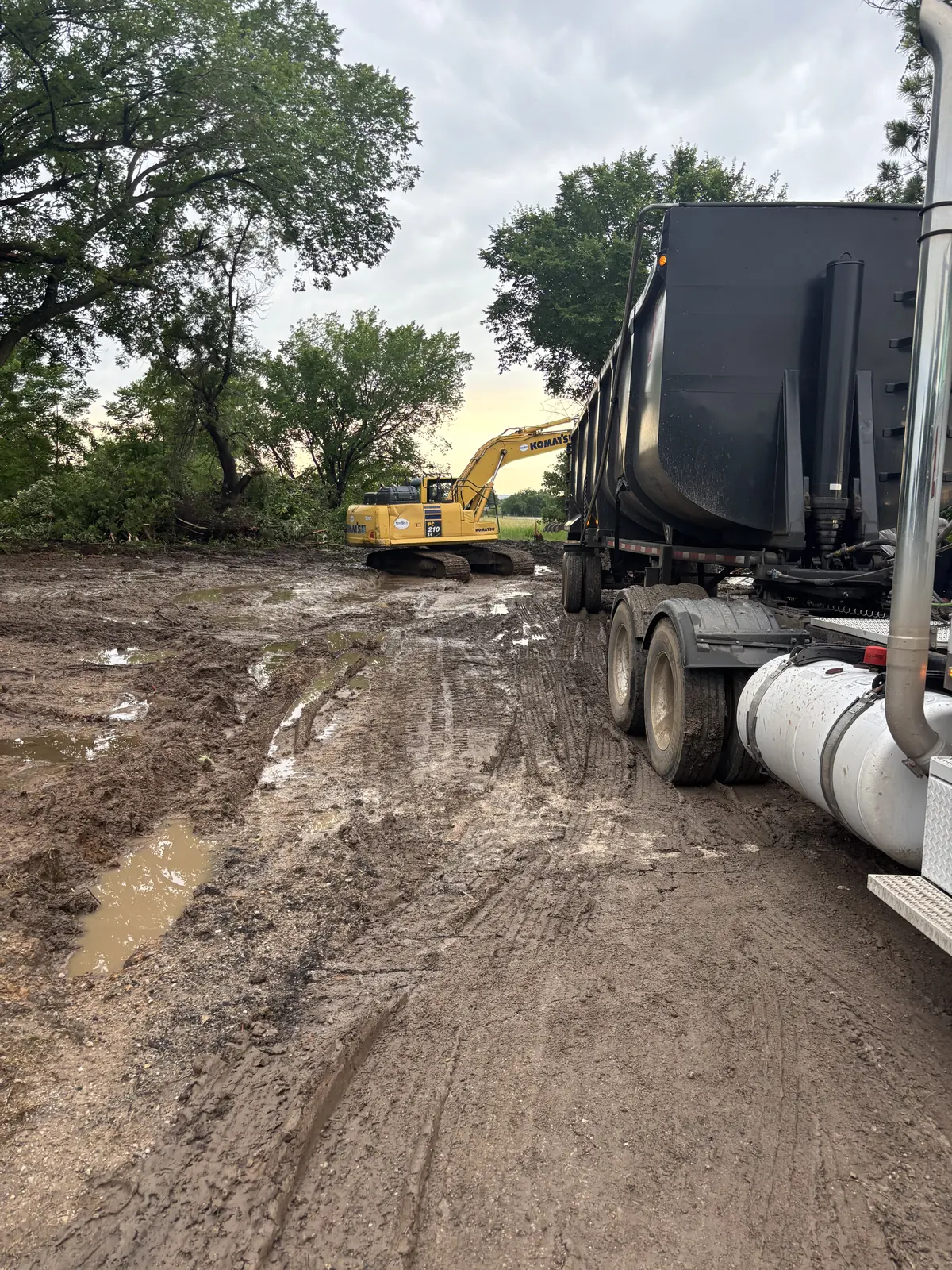
- Lost revenue or production per unit-day. For a truck: loads per day times rate, or the day rate on the contract. For equipment: what you bill the machine at per day, or, if you do not bill it separately, the value of the work the crew could not do. An excavator down on a Bixby pad site does not idle one machine; it idles the dump trucks cycling to it and the laborers waiting on the trench.
- Wages still paid. The driver or operator, fully loaded, for the hours they could not work productively. If they get reassigned to something useful, count only the wasted hours.
- Replacement rental. Call a rental yard and ask what a like unit costs per day, plus delivery and pickup. If you would not rent, this input is zero, and the lost-revenue input carries the whole load.
- Penalties. Late-delivery fees, service-level credits, liquidated damages on a construction contract, a missed pour. Pull them from the contract; do not guess.
- Catch-up overtime. The hours the crew works late or on Saturday to get back on schedule, at the overtime rate.
A Worked Example (Hypothetical)
Every number below is invented so the arithmetic is easy to follow. None of it is a benchmark or an average. Substitute your own figures.
Imagine a tandem dump truck that goes down at 9 a.m. on a Tuesday with a failed alternator, and assume:
- Revenue: 1,000 per day on a hauling contract
- Driver wage, loaded: 240 per day
- Replacement rental: not available on short notice, so zero
- Penalty: none in this contract
- Catch-up overtime: 4 hours on Saturday at 45 per hour = 180
- One-time: 400 tow, 150 emergency premium over a scheduled call
Recurring cost per lost day = 1,000 + 240 + 0 + 0 + 180 = 1,420. Over an 8-hour working day that is about 178 per hour. Add the one-time 550 and the event, if it costs a full day, comes to roughly 1,970. If a mobile repair gets the truck back by 1 p.m. instead, you lose half a day and skip the tow: about 710 plus 150, and the overtime probably disappears too.
Run it again for your highest-earning unit and your cheapest one. The spread between them tells you where a spare, a tighter PM interval, or a second set of batteries actually belongs.
Planned Time Costs Almost Nothing. Unplanned Time Costs Everything.
The same two hours of wrench time cost wildly different amounts depending on when they happen. A B service at 6 a.m. in your yard before the trucks roll out uses none of the five inputs. The same oil change done at 2 p.m. on a Thursday because the truck lost oil pressure on the Broken Arrow Expressway uses all five plus a tow. The goal of a maintenance program is not zero maintenance time; it is moving as much of it as possible from the second column to the first.
What Actually Causes Unplanned Downtime, and the PM Item That Prevents It
| Failure category | How it shows up | PM item that catches it |
|---|---|---|
| Batteries, cables, charging | No-crank on a cold morning; slow crank in August heat; intermittent electronics | Load test each battery, clean and coat terminals, check cable ends under the insulation, verify charging voltage at the batteries |
| Tires and wheel ends | Blowout, flat dual dragging, hot hub, wheel-seal leak onto the brake lining | Cold pressure on every tire, tread depth, matched duals, hub oil level and color, seal weep check |
| Brakes and air system | Out-of-service at a roadside inspection; frozen air lines; brake drag | Pushrod stroke at every wheel, applied leak-down test, air dryer purge check, desiccant cartridge before winter, tank drains |
| Cooling system | Overheat under load on a 100-degree afternoon; coolant loss with no visible leak | Refractometer and test strips, cap and system pressure test, fan hub and belt check, radiator and oil-cooler screens cleaned |
| Aftertreatment derate | Torque derate, then a 5 mph limp; the truck is legally driveable but useless | DEF quality at 32.5% urea, DEF level, regen history and soot load read from the ECM, NOx and DPF sensor codes addressed while they are still pending |
| Fuel system | Loss of power on the grade, stall at idle, gelled fuel below 20 degrees | Primary and secondary filters at interval, water separator drained, winter-treated fuel and an anti-gel plan before the first cold snap |
| Hydraulic hoses (equipment) | Burst hose, machine dead on the pad, oil on the ground | Hose inspection at every clamp, bend, and rub point; replace on abrasion through the outer cover, not on failure |
| Belts and tensioners | Sudden loss of charging and cooling at once | Belt cracking and glazing, tensioner travel, idler bearing noise |
| Lighting and wiring | Roadside violation; trailer ABS lamp; chafed harness shorting | Every lamp and marker, 7-way pin condition, harness chafe points at the frame and cab |
Notice that none of these are exotic. They are the items on a normal A and B service. Most unplanned downtime is a PM that did not happen, or happened without anyone looking carefully.
Oklahoma Adds Two Seasons of Risk
July and August push coolant, batteries, and A/C past their margins; a battery that tested marginal in May fails in the first week over 100 degrees. Winter brings the other list: DEF freezes at 12 degrees F and depends on the tank heater, untreated fuel gels below about 20, weak batteries that cranked fine in October do not crank at 15, and water in an air system freezes in the lines and the valves. A before-summer and a before-winter check, on top of the normal intervals, takes most of that risk off the table.
FAQ
Should I count the repair bill in the downtime cost?
Keep it separate. The repair costs what it costs whether it happens on your schedule or on the shoulder. Downtime cost is everything else the failure made you pay, which is the part you can actually reduce.
How do I estimate revenue per day on equipment I do not bill separately?
Use the rental rate for a like machine as a floor. If you would pay that to have it, it is worth at least that to you. If the crew cannot work without it, add their wages.
What is the single cheapest thing that prevents the most downtime?
A load test on every battery twice a year and a look at the cable ends. Electrical no-starts are the most common reason a unit does not leave the yard, and they are the cheapest thing on the list to catch.
Cut the Unplanned Column in Tulsa
Tulsa Fleet Repair is a mobile operation — the service truck comes to your yard, jobsite, or breakdown location anywhere within 120 miles of Tulsa, with 24/7 emergency response when a unit can't wait, and scheduled preventive maintenance when it can. Call (918) 925-9356 or request service online.