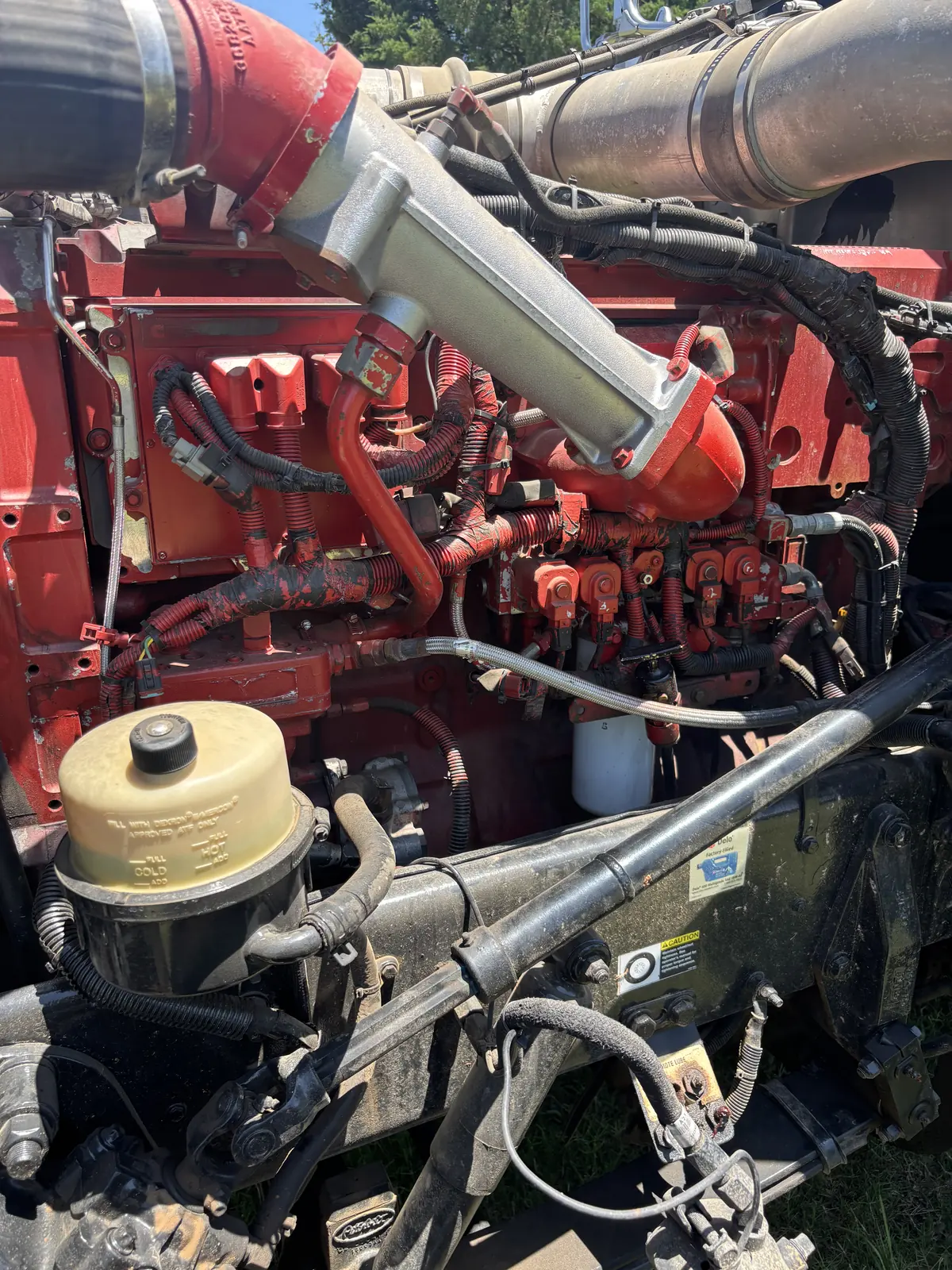
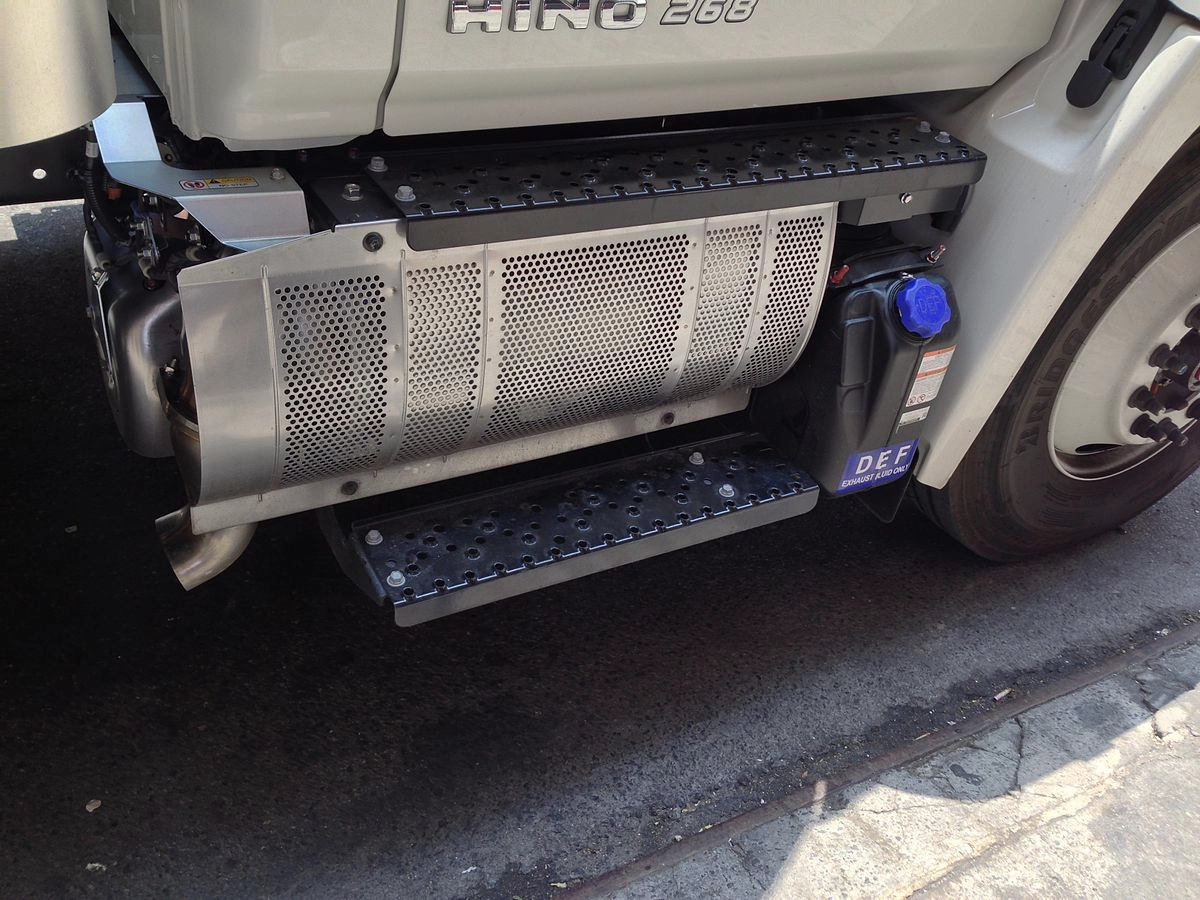
Diesel exhaust fluid is 32.5 percent urea in deionized water, made to the ISO 22241 standard, sprayed into the exhaust ahead of the SCR catalyst to turn NOx into nitrogen and water vapor. The fluid is simple. The problems come from what happens to it in an Oklahoma tank: summer heat degrades it and dries it into crystals at the injector, and winter cold snaps freeze it at 12°F. Both end in a fault code and a derate. Here is how the system works, what fails by season, and what a maintenance routine should cover.
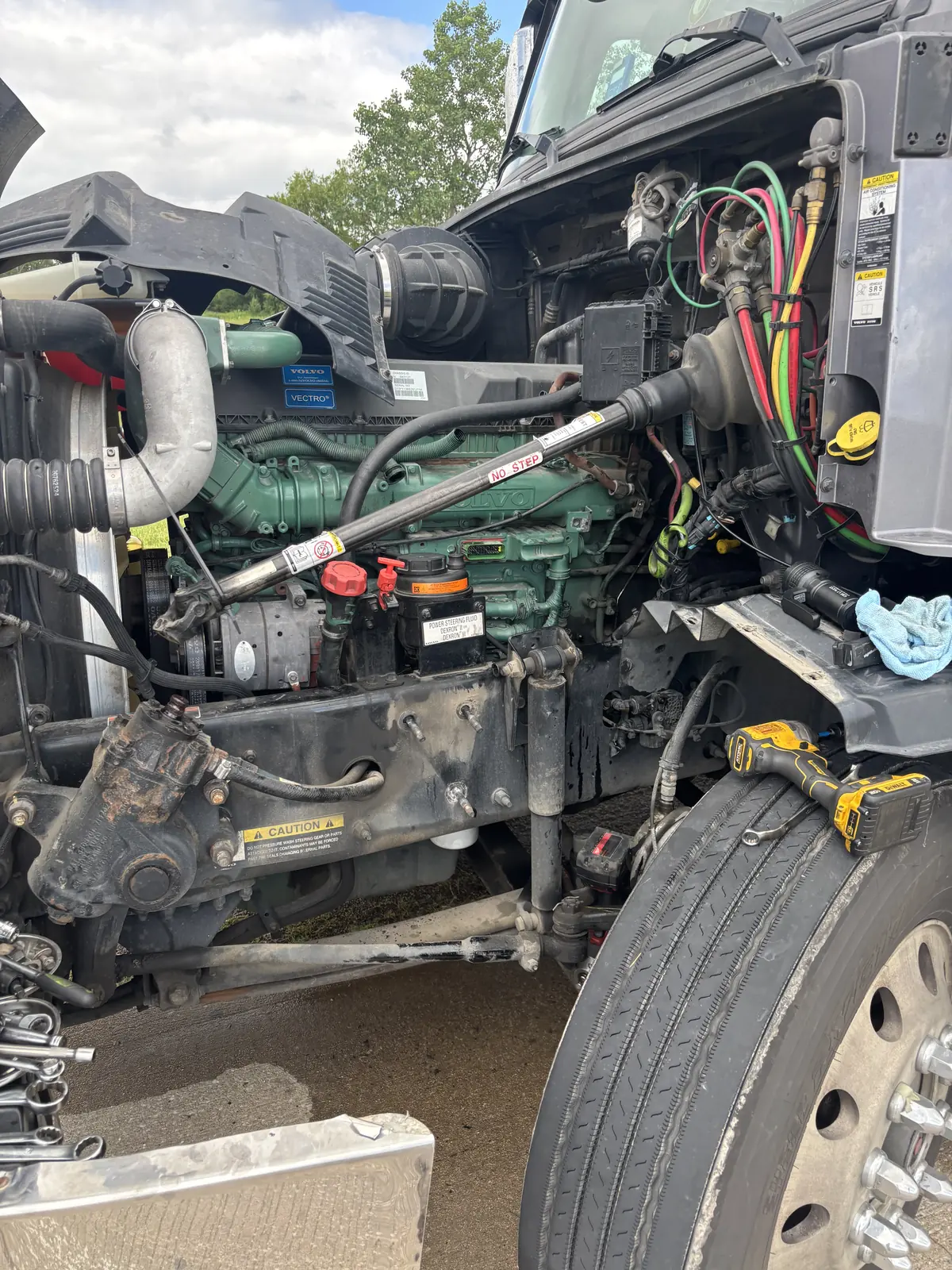
What Is in the System
- DEF tank with a combined level, temperature, and (on newer trucks) quality sensor
- Supply module: pump, filter, and pressure sensor, usually mounted on or near the tank
- Dosing injector at the SCR inlet, with a coolant or air passage to keep it from cooking
- Tank and line heaters: coolant-loop on heavy trucks, electric on pickups and vans
- NOx sensors before and after the SCR catalyst, plus exhaust temperature sensors
- SCR catalyst and, on most trucks, an ammonia slip catalyst behind it
- The aftertreatment control module that runs all of it and decides when to derate
Two facts to settle up front. Disabling or bypassing any of this is a federal violation that carries civil penalties per vehicle, and it turns up when a truck is sold or inspected. And DEF quality is not all the same: the fluid is cheap, but off-spec or contaminated DEF ruins a catalyst that is not.
Summer: Heat Degrades and Crystallizes
DEF starts breaking down faster above about 86°F. Stored cool it keeps for a couple of years; stored in a hot warehouse or a tote in the sun in Tulsa it is good for roughly a year, and a machine that sat all summer with DEF in the tank can be out of spec by fall. When DEF dries it leaves urea crystals, and the place it dries is the injector tip and the line right behind it, where exhaust heat cooks it. A crusted injector sprays a poor pattern, conversion drops, and the outlet NOx sensor reports it. What to do:
- Store DEF out of the sun and off hot concrete, and rotate stock by date code; jugs and totes carry one.
- Test old DEF with a refractometer before starting a machine that sat. Spec is 32.5 percent; anything far outside about 31.8 to 33.2 gets drained, not topped off.
- Pull and inspect the dosing injector when SCR efficiency codes appear. Crystal buildup cleans off with warm water; a scored or stuck injector gets replaced.
- Keep the fill cap and neck clean. Dust and diesel at the filler go straight to the catalyst.
Winter: 12°F and Below
DEF freezes at 12°F, and the system is designed for it. The tank heater thaws a pocket of fluid, the module delays dosing until it has liquid and pressure, and no fault is set as long as the heaters work. Frozen DEF expands about seven percent, which is why tanks are not filled to the top in winter. The failures are heater circuits that do not come on and lines that froze because a heater failed months earlier. Before the first cold snap, command the tank and line heaters on with a scan tool and confirm they draw current and the tank temperature climbs. Keep tanks at least half full through winter and give a cold truck its warm-up time before expecting dosing.
Fluid and Parts
- Buy DEF with the API certification mark and an ISO 22241 statement on the label, and check the date code.
- Use a dedicated DEF funnel, pump, or nozzle. A diesel funnel leaves enough fuel residue to matter.
- Never add anything to DEF: no water, no anti-freeze, no additive. There is no legitimate product for it.
- Dosing injectors and NOx sensors are calibrated to the truck's module. Use OEM parts, and expect a NOx sensor to need a learn or reset procedure after replacement.
- The supply module filter is a real service item with its own interval in the OEM schedule. It gets skipped and then the pump runs dry.
Maintenance Routine
| When | What |
|---|---|
| Every PM visit | Scan for aftertreatment codes, active and stored; look for white crystals at the tank cap, line fittings, and injector; clean the cap and neck; compare DEF use to fuel use (heavy-duty trucks typically run a few percent of fuel volume; if DEF use stops or doubles, something is wrong) |
| Each fall | Command-test tank and line heaters; refractometer check on any DEF that sat; inspect lines for heat damage and chafe |
| Per OEM interval | Replace the supply module filter; on trucks that have it, run the scan tool's SCR efficiency or DEF quality test to reset the monitor after service |
| Any DEF or SCR warning | Diagnose before the countdown runs out; the derate does not wait |
Codes and Derate Steps
The codes you will see most: P20EE (SCR NOx catalyst efficiency below threshold), P204F (reductant system performance), P203F (reductant level too low), P20E8 (reductant pressure too low), and NOx sensor codes in the P2200 and P229F families. On J1939 trucks the same faults come through as SPN 4364 (SCR conversion efficiency), SPN 1761 (DEF tank level), SPN 3031 (DEF tank temperature), SPN 4334 (DEF pressure), and SPN 3226 (outlet NOx).
Once a fault is confirmed, the inducement starts. On heavy-duty trucks it goes from a warning lamp to a torque derate to a 5 mph limit. Pickups and vans run a mileage countdown, then step through speed limits and finally a 5 mph or no-restart condition after the next fill. A truck that hits the final step is a tow, and the clock starts at the first lamp.
P20EE is rarely a dead catalyst. Bad or old DEF, a crystallized injector, a lazy NOx sensor, an exhaust leak ahead of the sensor, and short trips that never get the SCR to working temperature all set the same code. Test the fluid and the injector before quoting a catalyst.
What Gets Done On-Site
Scanning and clearing aftertreatment codes, refractometer testing, dosing injector removal and cleaning or replacement, heater circuit diagnosis, supply module pressure testing, forced SCR efficiency tests, and draining and flushing a tank that got the wrong fluid are all done from the service truck at your yard. A catalyst replacement on a Class 8 truck is a bay job. Either way, mobile diagnostics tell you which one you have while the truck is still drivable.
FAQ
Can I keep driving with a DEF warning on?
For a while, and the dash will tell you how long. Use that window to get it diagnosed, because the derate at the end of the countdown is not negotiable.
DEF is low and the store is closed. Can I add water?
No. Diluted DEF sets a quality fault and can leave deposits in the catalyst. Buy DEF; it is stocked at nearly every truck stop and farm store in the state.
Diesel went in the DEF tank. Now what?
Do not start the engine. Fuel in the DEF circuit ruins the pump, injector, and catalyst in minutes of running. The tank and lines get drained and flushed first. The same goes for DEF in the fuel tank; it crystallizes and corrodes the fuel system.
Need This Done On-Site in Tulsa?
Tulsa Fleet Repair is a mobile operation for aftertreatment work on semi trucks, Powerstroke and Cummins pickups, and DEF-equipped equipment. The service truck comes to your yard, jobsite, or breakdown location anywhere within 120 miles of Tulsa, with 24/7 emergency response when a unit can't wait. Call (918) 925-9356 or request service online.