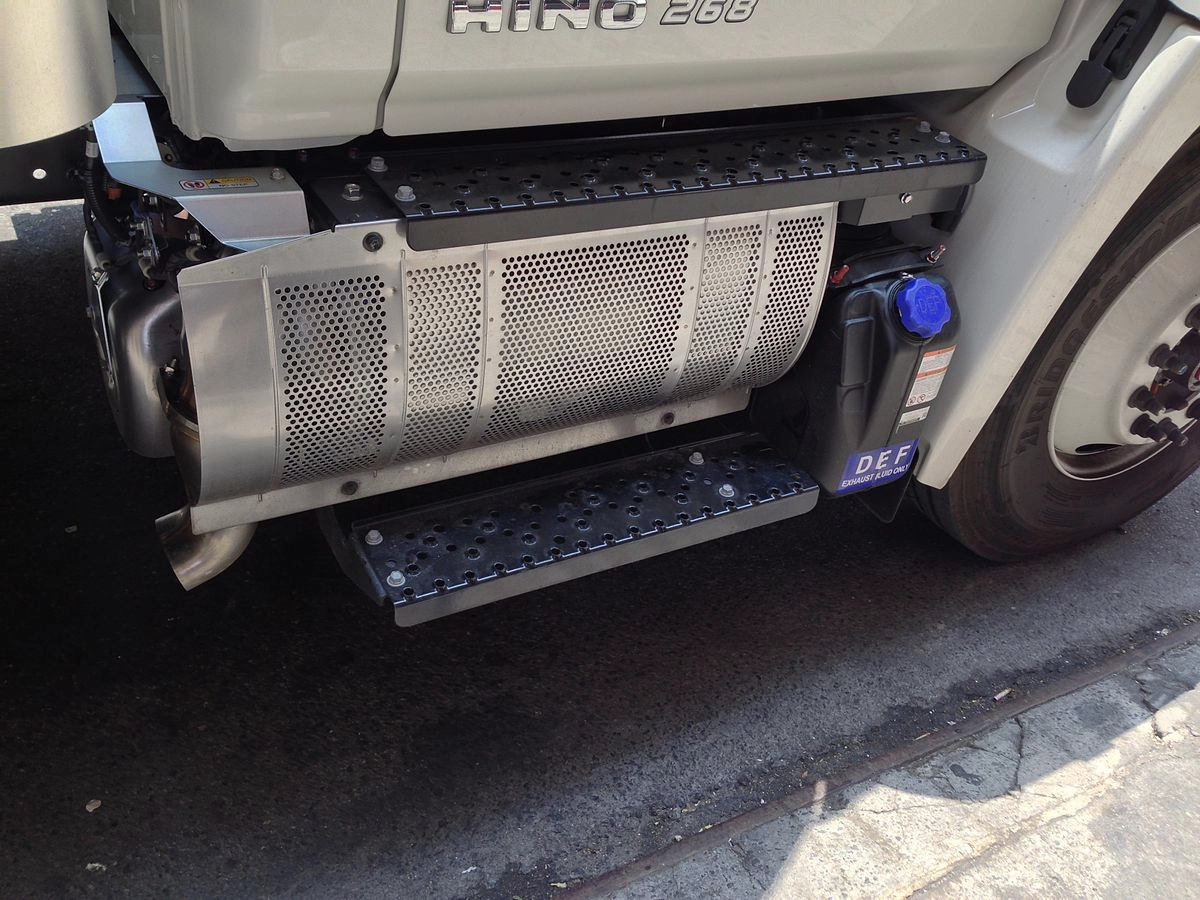
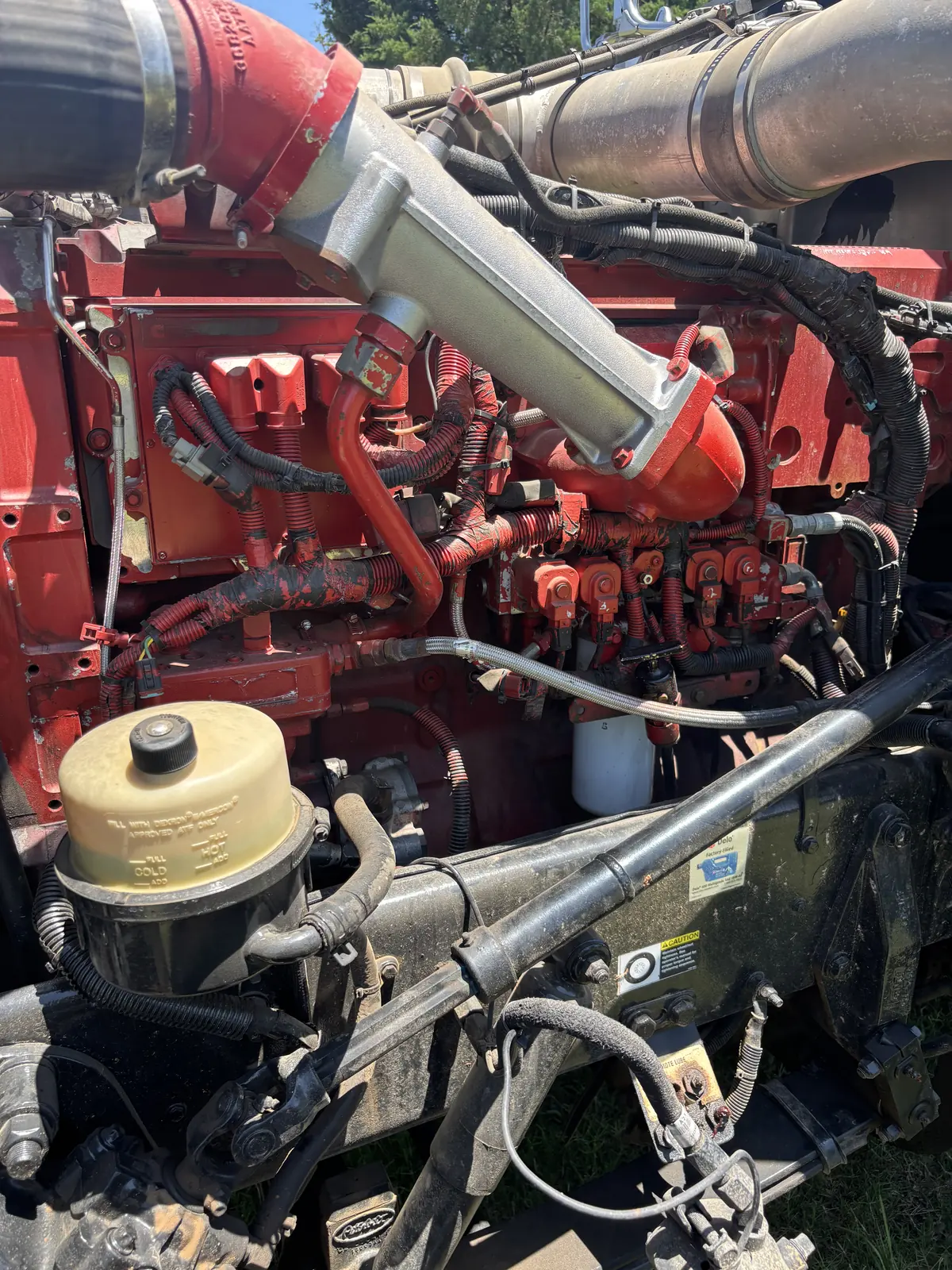
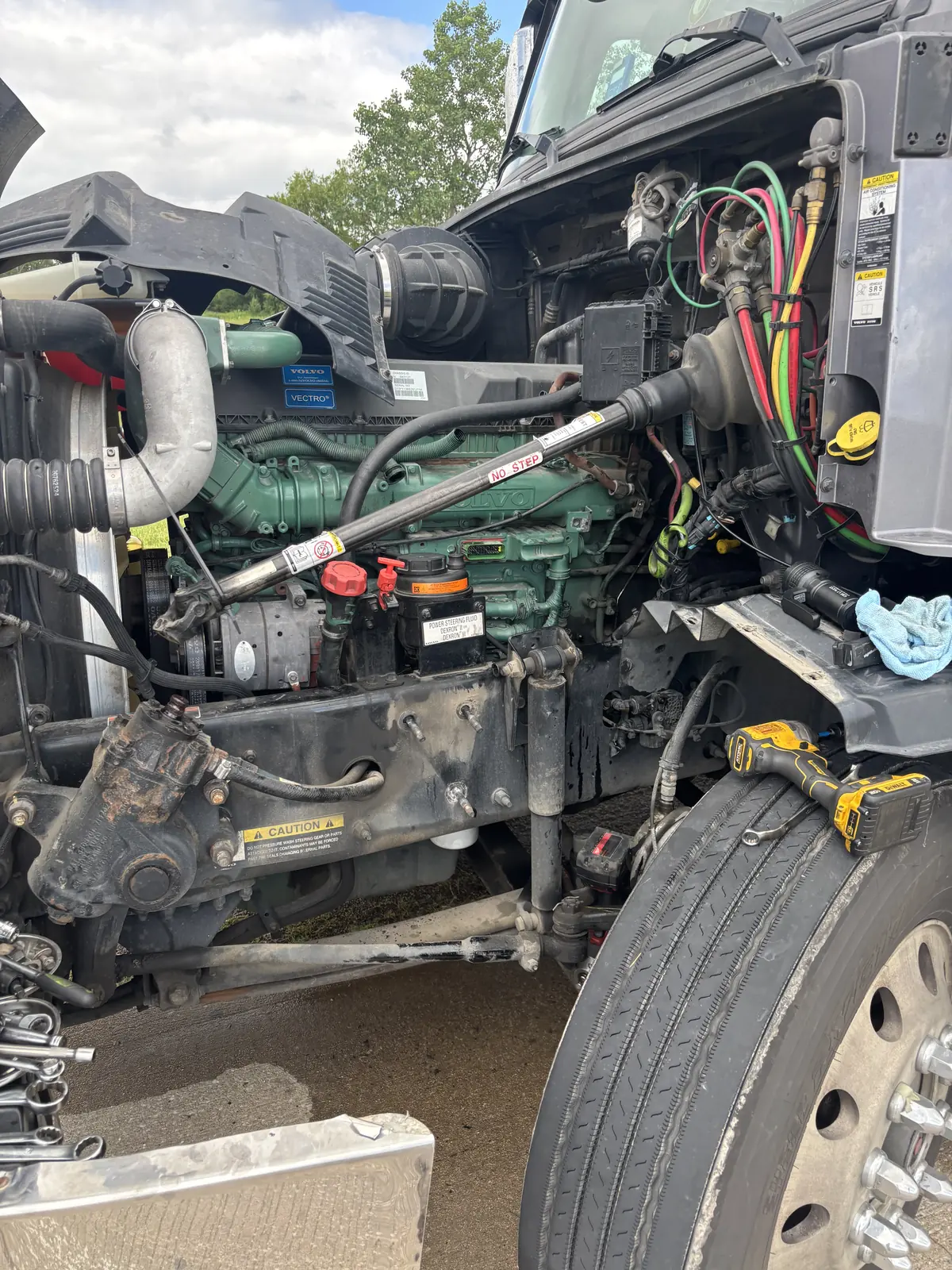
Every on-highway diesel built for the 2007 model year and later carries a diesel particulate filter, and every one built for 2010 and later adds selective catalytic reduction with diesel exhaust fluid. Those two systems, with the EGR and oxidation catalyst that feed them, are where most modern diesel downtime comes from, and none of it is mysterious once you know what each part does and what it needs. This is a working explanation for the people who own the trucks.
The Two Milestones
- EPA 2007: particulate matter cut to 0.01 g/bhp-hr. Not achievable in-cylinder, so every engine got a DPF. Ultra-low-sulfur diesel (15 ppm) arrived at the same time because sulfur poisons the catalysts.
- EPA 2010: NOx cut to 0.20 g/bhp-hr. Nearly every OEM answered with SCR and DEF, which lets the engine be tuned for efficiency and clean up NOx downstream. Off-road equipment followed on the Tier 4 Final schedule through 2015, which is why a 2014 excavator has DEF and a 2011 one may not.
How the Pieces Work Together
EGR: exhaust gas recirculation
Cooled exhaust is fed back into the intake to lower combustion temperature and cut NOx at the source. It is why modern engines have an EGR cooler that can crack and leak coolant, a valve that soots up, and a delta-pressure or flow sensor to verify flow. Too little EGR means more NOx for the SCR; too much means more soot for the DPF.
DOC: diesel oxidation catalyst
The first brick in the can. It oxidizes unburned fuel and carbon monoxide and converts NO to NO2, which is what passively burns soot in the DPF. During an active regen, fuel dosed into the exhaust burns across the DOC to raise DPF inlet temperature. A face-plugged, poisoned, or cracked DOC makes every downstream problem worse.
DPF: diesel particulate filter
A ceramic wall-flow filter that traps soot. Soot is carbon and burns off during regeneration; ash from oil additives and wear metal does not, and accumulates until the filter is cleaned off the truck. The ECM estimates soot load from differential pressure across the filter and a model of how the engine has been run.
SCR: selective catalytic reduction
DEF is injected ahead of the SCR catalyst and decomposes into ammonia, which reacts with NOx across the catalyst into nitrogen and water. NOx sensors upstream and downstream measure conversion efficiency; if it drops below target, the ECM assumes bad DEF, a bad doser, or a bad catalyst and starts the inducement timer. SCR needs exhaust heat (roughly 400°F and up), so it is least effective at idle and on short stop-and-go routes.
Regeneration: Passive, Active, Parked
| Type | When it happens | What is going on |
|---|---|---|
| Passive | Continuously at highway load, exhaust above roughly 500–600°F | NO2 from the DOC oxidizes soot with no extra fuel. A truck on I-44 all day may never need anything else. |
| Active | ECM-triggered as soot load climbs; every few hundred miles on a duty cycle without highway heat | Fuel is dosed (late post-injection or an exhaust injector) to push DPF inlet to roughly 1,100°F for 20–40 minutes. The truck must keep running. |
| Parked | Driver-initiated from the dash switch when the DPF lamp is on | Controlled high idle for 30–60 minutes. Nothing flammable near the tailpipe. |
| Forced (service) | Commanded with the OEM tool after a fault or when soot load exceeds the parked-regen limit | Run under the tool with live temperatures watched. Above a certain soot load even this is locked out and the DPF must be cleaned off-truck to avoid cracking it. |
Interrupted regens are the most common cause of DPF trouble. A driver who shuts down mid-regen five times in a row has a plugged filter by the end of the week.
DEF Facts That Matter
- DEF is 32.5% high-purity urea in 67.5% deionized water, made to ISO 22241. That ratio has the lowest freeze point of any urea-water mix.
- It freezes at 12°F (-11°C). The tank heater thaws it once the engine runs; a frozen line or a dead heater sets heater-circuit codes and, if it persists, a derate. That matters in a January cold snap in Bartlesville or Stillwater.
- Heat degrades it. Sealed and below about 77°F it lasts around a year; in a hot truck or a sun-baked shed in a Tulsa summer, closer to six months. Old DEF fails the quality sensor.
- Contamination kills SCR systems. Diesel, coolant, hose water, or any metal in the tank means a poisoned catalyst or a failed pump. Never use a fuel funnel or an open container.
- DEF crystallizes when it dries. White crust at the doser tip, around the cap, or in the mixer tube restricts injection and is why dosers get cleaned or replaced.
- A refractometer check takes ten seconds and settles whether the DEF in the tank is in spec (32.5% ± 0.7).
Fault Families and Derate Logic
Aftertreatment codes come in families, and the ECM's response escalates on a timer, not a switch:
- DPF: P2002 (efficiency below threshold), P244A/P244B (differential pressure too low or too high, a cracked filter or a plugged one), P2463 (soot accumulation), P246C (restriction, limited power). On J1939 trucks, SPN 3719 (soot load %) and SPN 3720 (ash load %).
- SCR/DEF: P20EE (NOx efficiency below threshold), P204F (reductant system performance), P203F (level low), P20B9 (reductant heater), P2200/P229F (NOx sensor). On J1939: SPN 4364 (SCR efficiency), SPN 1761 (DEF level), SPN 3226 (outlet NOx).
- EGR: P0401 (insufficient flow), P0402 (excessive flow), P0404/P0405 (valve position), P040B (EGR temperature).
- Temperature sensors: P0544, P2031, P2033 and their kin. An EGT sensor out of range disables regen, so a plugged DPF is often the symptom of a sensor fault from months earlier.
Derate logic follows the EPA inducement rules: a warning lamp, then a torque reduction (commonly 25%), then a further cut, then a 5 mph limit or a no-restart after the next shutdown. Low DEF, DEF quality, DEF system tampering, and SCR efficiency each run their own timer; the tool shows the countdown. Fixing the fault and completing a drive cycle or a tool-commanded reset clears it. The diagnostics page covers what that visit looks like.
Why Tampering Is Off the Table
Removing or disabling a DPF, SCR, EGR, or any sensor that monitors them, or installing a tune that turns them off, violates the Clean Air Act's prohibition on tampering and defeat devices. That applies to the shop that does it and the fleet that operates the truck, and it carries federal civil penalties per vehicle. A deleted truck is also worth less at resale and fails any emissions check a buyer runs. A truck that keeps derating has a fault to diagnose, not a system to remove.
Aftertreatment Maintenance Schedule
| Item | Interval | Notes |
|---|---|---|
| Engine oil | OEM drain interval, CK-4 low-ash | Ash in oil becomes ash in the DPF. Never run an older CI-4 oil in a DPF engine. |
| DEF | Every fill of the DEF tank | ISO 22241 from a sealed container; refractometer check monthly on trucks with quality codes. |
| DEF pump filter | Per OEM, commonly 150,000–200,000 mi or 2 yr | A plugged filter looks like a bad pump. |
| DEF doser | Inspect every PM; clean or replace on crystallization | Crust at the tip or in the mixer is the tell. |
| EGR valve and cooler | Inspect every PM; clean valve at OEM interval | Pressure-test the cooler on any unexplained coolant loss. |
| DPF ash cleaning | Roughly 200,000–400,000 mi, or at the ECM ash limit | Off-truck cleaning; inspect for cracks and face plugging while it's out. |
| NOx and EGT sensors | Diagnose on code | OEM sensors; clear adaptives and run a verification cycle. |
| Parked regen | When the lamp asks, and monthly on short-route trucks | Before the derate, not after. Let it finish. |
Tulsa Notes
Two duty cycles cause most of the aftertreatment calls here. Delivery and service trucks running stop-and-go inside the loop and along US-169 and I-244 never get passive regen, so their DPFs soot up and their SCRs run cold. Trucks and equipment that idle for hours at jobsites, the Port of Catoosa, or a well pad do the same. The answer for both: let regens finish, keep DEF fresh, and check soot and ash load at every PM visit.
FAQ
Can I keep driving in a derate?
At reduced power, for a while; the tool shows the time or distance left. Once the 5 mph limit hits, the truck is done until the fault is cleared. Plan the repair when the lamp comes on.
Does a DPF need to be replaced, or just cleaned?
Cleaned, in most cases, when ash reaches the limit. Replacement is for a cracked or melted filter, usually from an uncontrolled regen on an overloaded filter.
Need Aftertreatment Work Done On-Site in Tulsa?
Tulsa Fleet Repair is a mobile operation — the service truck comes to your yard, jobsite, or breakdown location anywhere within 120 miles of Tulsa, with 24/7 emergency response when a unit can't wait. Call (918) 925-9356 or request service online.