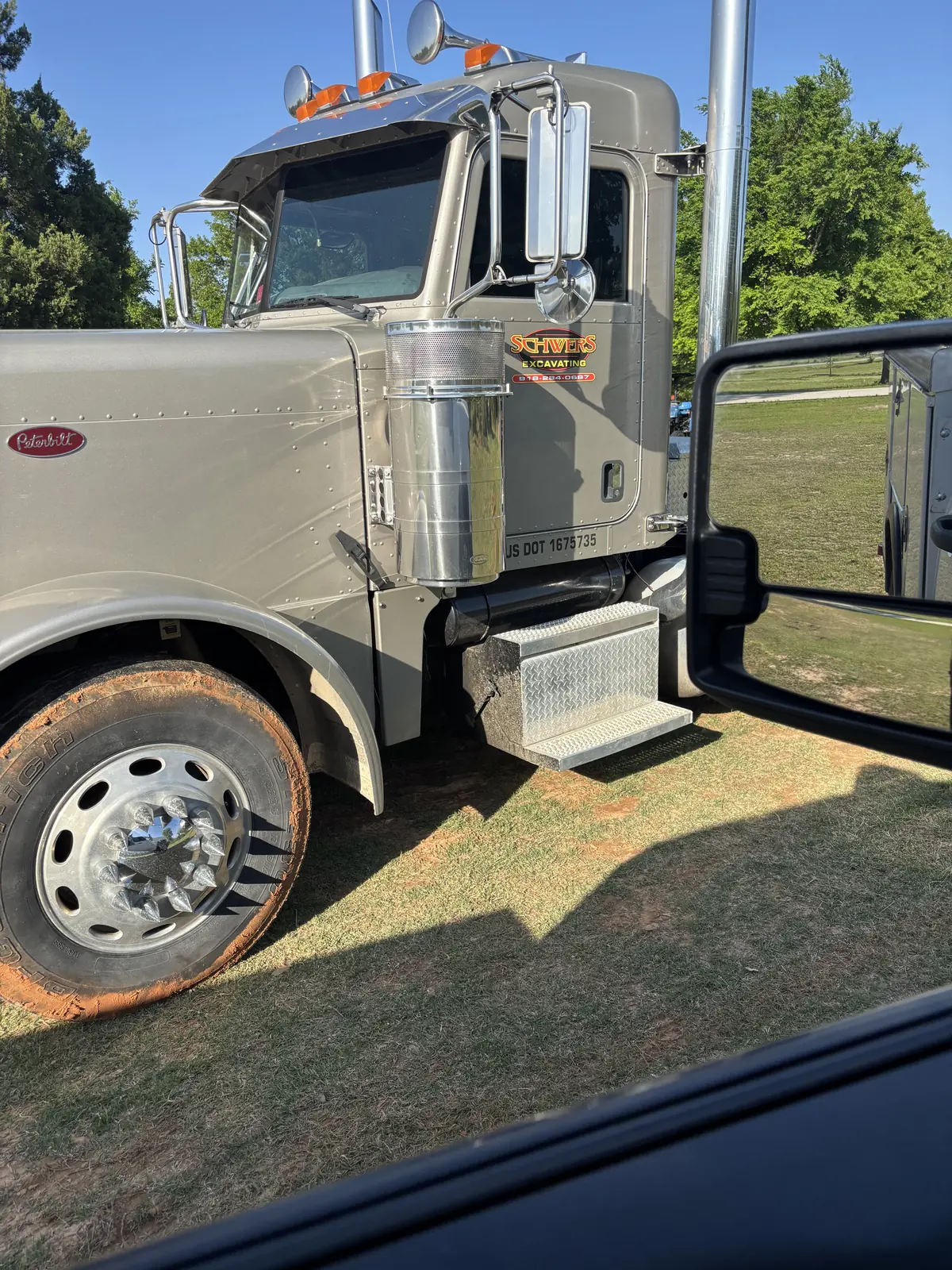
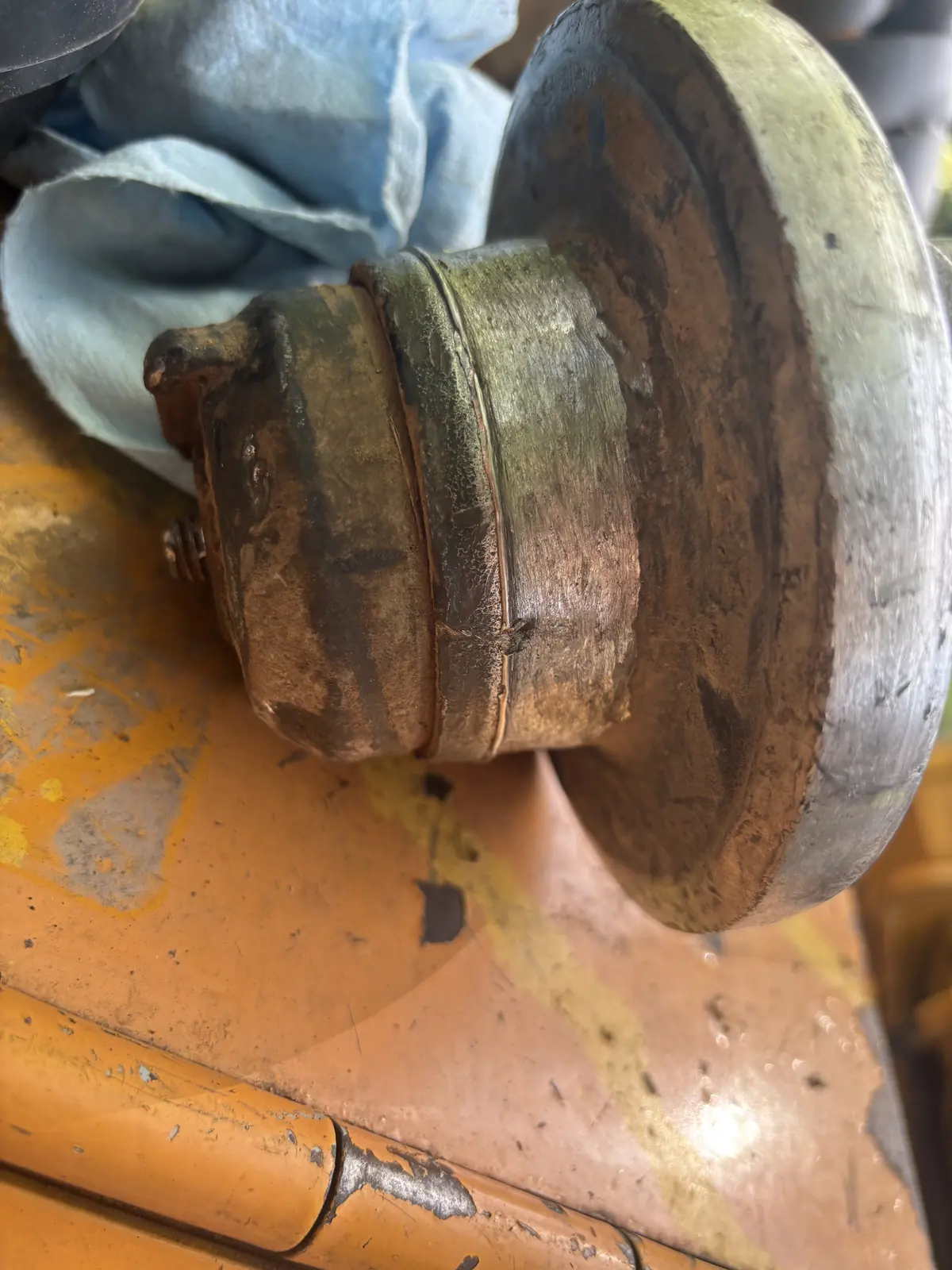
Every commercial motor vehicle in interstate commerce over 10,001 lb GVWR has to pass an annual inspection under 49 CFR 396.17, be inspected by its driver every day under 396.11 and 396.13, and have maintenance records kept under 396.3. Oklahoma adopts the federal rules for intrastate carriers too, so a dump truck that never leaves Tulsa County lives under the same requirements as a Cascadia running the Turner Turnpike to Oklahoma City. Here is what those rules require, what an inspector looks at on the shoulder, and what puts a truck out of service. The regulation text is on the eCFR page for 49 CFR Part 396.
396.17: The Annual Inspection
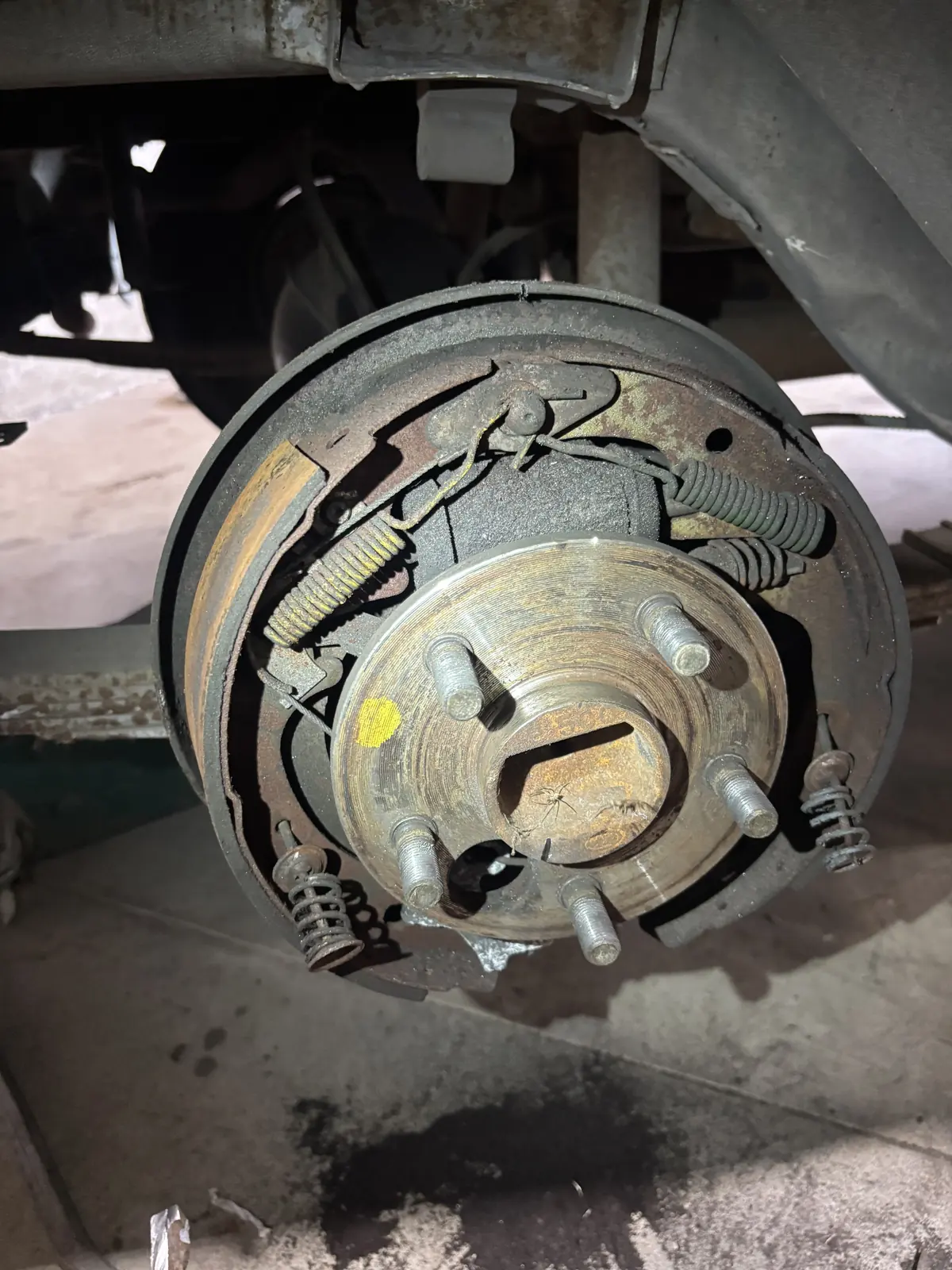
Every CMV must pass an inspection at least once every 12 months, performed by a qualified inspector (396.19: understands the criteria, has training or experience on the type of vehicle, and can identify defective components), against the Minimum Periodic Inspection Standards in Appendix A to Part 396. Proof of the inspection, either the report or a decal referencing it, must be on the vehicle, and the inspection report itself is retained for 14 months (396.21).
Appendix A is the checklist. It covers, in order: brake system (service brakes, parking brake, brake drums and rotors, hoses and tubing, low-pressure warning, tractor protection valve, air compressor, hydraulic and vacuum systems), coupling devices (fifth wheel, pintle hooks, drawbar, safety devices), exhaust, fuel system, lighting devices, safe loading, steering mechanism, suspension, frame, tires, wheels and rims, windshield glazing, and windshield wipers. Trailers get the same treatment. A mobile inspection at your yard covers every item on that list with the unit on level ground and the brakes accessible; see the DOT inspection page.
396.11 and 396.13: Daily Inspections
396.13 (pre-trip): before driving, the driver must be satisfied the vehicle is in safe operating condition, review the last DVIR, and sign it if defects were noted and repaired.
396.11 (post-trip DVIR): at the end of each day's work, the driver reports on service brakes and trailer brake connections, parking brake, steering, lighting and reflectors, tires, horn, wipers, mirrors, coupling devices, wheels and rims, and emergency equipment. A written report is required only when a defect is found or reported. The carrier must repair any defect that would affect safe operation before the vehicle is dispatched again, certify the repair on the DVIR, and keep the DVIR and certification for three months.
The DVIR is where most small fleets fall down: defects get noted and nobody signs off the repair, or the repair is done and never documented. An inspector who sees a DVIR defect from Tuesday still open on Thursday has a violation without touching the truck.
396.3: Maintenance Records
Every carrier must systematically inspect, repair, and maintain every vehicle under its control, and keep records that include:
- Identification of the vehicle: company number, make, serial number, year, tire size, and who furnishes it if it isn't company-owned
- A means to indicate the nature and due date of the inspection and maintenance operations to be performed
- A record of the inspection, repairs, and maintenance showing the date and nature of the work
Records are kept where the vehicle is housed or maintained for one year, and for six months after the vehicle leaves the carrier's control. A binder, a spreadsheet, or fleet software all satisfy this if the fields are there. Mobile PM service should hand you the record, not just the invoice; see preventive maintenance.
Part 393: What the Equipment Rules Require
| System | Rule | What it comes down to |
|---|---|---|
| Brakes | 393.40–393.55 | Brakes on all wheels, matched by axle; automatic slack adjusters on air-braked vehicles built after Oct. 1994; low-air warning at 55 psi or below; pushrod stroke within the limit for the chamber type; no cracked drums, contaminated linings, or lining below 1/4 in. on air brakes |
| Lighting | 393.9–393.33 | All required lamps and reflectors present and working: headlamps, tail, stop, turn, clearance, side marker, identification lamps, license plate lamp, conspicuity tape on trailers. One required lamp out is a violation |
| Tires | 393.75 | Minimum tread 4/32 in. on steer tires, 2/32 in. elsewhere; no exposed cord, separation, cuts to the ply, or audible leaks; inflation at or above the load rating; no regrooved or recapped tires on the steer axle of a bus |
| Coupling | 393.70–393.71 | Fifth wheel securely mounted, no cracks, locking jaws fully engaged and locked, kingpin not worn beyond limits; safety chains and pintle hooks properly rated and secured |
| Wheels, steering, suspension | 393.205–393.209 | No missing or loose lug nuts, no cracked wheels; steering lash within the limit for the wheel diameter; no broken leaves, missing U-bolts, or cracked hangers |
CVSA Out-of-Service Criteria
The Commercial Vehicle Safety Alliance publishes the North American Standard Out-of-Service Criteria that inspectors use to decide whether a defect is a citation or a parked truck. The ones that catch fleets most often:
- 20% brake rule. If 20% or more of the service brakes on a vehicle or combination are defective (out of adjustment beyond the limit, inoperative, missing, or contaminated), the vehicle is out of service. On a five-axle tractor-trailer with ten brakes, that is two.
- Air loss. An audible air leak at a brake chamber, or air loss that keeps the system from holding reserve pressure, is OOS.
- Tires. Steer tire under 2/32 in. at any two adjacent grooves, exposed cord, or a flat is OOS.
- Coupling. More than 20% of fifth-wheel mounting fasteners loose or missing, or jaws that don't fully lock, is OOS.
- Lighting. No operative headlamps or tail lamps at night, or no operative stop lamps, is OOS. A single marker out is a citation, not an OOS.
An OOS order means the vehicle does not move until the defect is fixed, which on the shoulder of I-44 means a mobile mechanic or a tow. See emergency repair.
Roadcheck and Brake Safety Week
CVSA runs an International Roadcheck every year over three days in May, with a heavy focus on Level I inspections and a different announced emphasis each year, and Brake Safety Week in August, with an unannounced Brake Safety Day usually in the spring. Oklahoma Highway Patrol participates at fixed sites and portable scales along I-44, I-40, US-75, and the turnpikes. Fleets that schedule a brake stroke check, a lighting walk-around, and a tire and coupling inspection in the two weeks before each event come through them clean.
What a Level I Inspection Looks Like
The North American Standard Level I is the full 37-step inspection: driver credentials, hours of service, seat belt, and alcohol and drug indicators, then the vehicle. The inspector walks the unit, checks every required lamp, measures tread, checks the coupling, gets under the truck to check brake adjustment on every axle (chalk mark on the pushrod, brakes applied at 90 to 100 psi, measure the stroke), and inspects drums and linings, air lines and chambers, suspension, frame, driveline, exhaust, fuel system, and cargo securement. It takes 45 minutes to an hour on a clean truck. A Level II is the same without going under the truck; a Level III is driver-only.
How This Feeds CSA
Every roadside inspection result goes into the carrier's Safety Measurement System. Vehicle defects land in the Vehicle Maintenance BASIC, weighted by severity (OOS violations get extra weight) and by time (the last six months count three times, six to twelve months twice, twelve to twenty-four months once). A clean inspection also counts; it improves the ratio. A couple of brake and lighting citations in one spring can put a small fleet over the intervention threshold, and a year of clean inspections is what brings it back down. The cheapest thing a fleet can do for its score is fix DVIR defects the day they are written.
FAQ
Does a 10,001–26,000 lb truck really need an annual inspection?
Yes, if it is a CMV under 390.5: over 10,001 lb GVWR or GCWR in interstate commerce, or hauling placarded hazmat. Oklahoma applies the same standard intrastate for most operations.
Can the annual inspection be done at my yard?
Yes. Nothing in 396.17 requires a shop; it requires a qualified inspector, Appendix A criteria, a report, and proof on the vehicle.
What is the single most common OOS violation?
Brakes out of adjustment, followed by brake hoses and tubing, then tires and lighting. All of them are visible on a pre-trip.
How long do I keep the annual inspection report?
14 months from the report date, at the carrier's principal place of business or where the vehicle is housed.
Need DOT Inspections Done On-Site in Tulsa?
Tulsa Fleet Repair is a mobile operation — the service truck comes to your yard, jobsite, or breakdown location anywhere within 120 miles of Tulsa, with 24/7 emergency response when a unit can't wait. Call (918) 925-9356 or request service online.