Most of the safety equipment worth putting on a work truck is not exotic. It is a pressure sensor, a float switch, a painted mark on a pushrod, or a lamp that does not burn out. Each one either stops a failure chain early or makes a violation impossible. This guide covers what each system does, how it fails when it is neglected, and what the physical consequence of skipping it looks like, without any invented return-on-investment math.
Tire Pressure Monitoring and Automatic Inflation
Underinflation is the cause behind most tire failures, and a dual on the inside of a drive or trailer axle can run 30 psi low for weeks without anyone noticing; the outside dual carries the load and the inside one flexes, overheats, and comes apart on the Creek Turnpike. Two systems address it:
- TPMS: a sensor in each wheel reports pressure and temperature to a dash display or the telematics unit. It does not fix anything; it tells the driver before the tire is destroyed. Batteries in the sensors last several years and the system is only as good as the driver's response to the alert.
- Automatic tire inflation (ATIS): common on trailers, uses the trailer air supply, routed through the axle, to keep tires at a set pressure. A warning lamp on the nose of the trailer lights when the system is adding air, which tells you a tire is leaking before it goes flat. The rotary union at the hub cap is the wear item; a leaking union bleeds trailer air.
Neglect looks like this: a tire at half its rated pressure is out of service under the CVSA criteria, a steer tire below 4/32 inch tread or any other tire below 2/32 inch is a violation, and a blown inside dual usually takes the mud flap, the air line, and sometimes the fender with it.
Low-Coolant and Oil-Pressure Alarms and Shutdowns
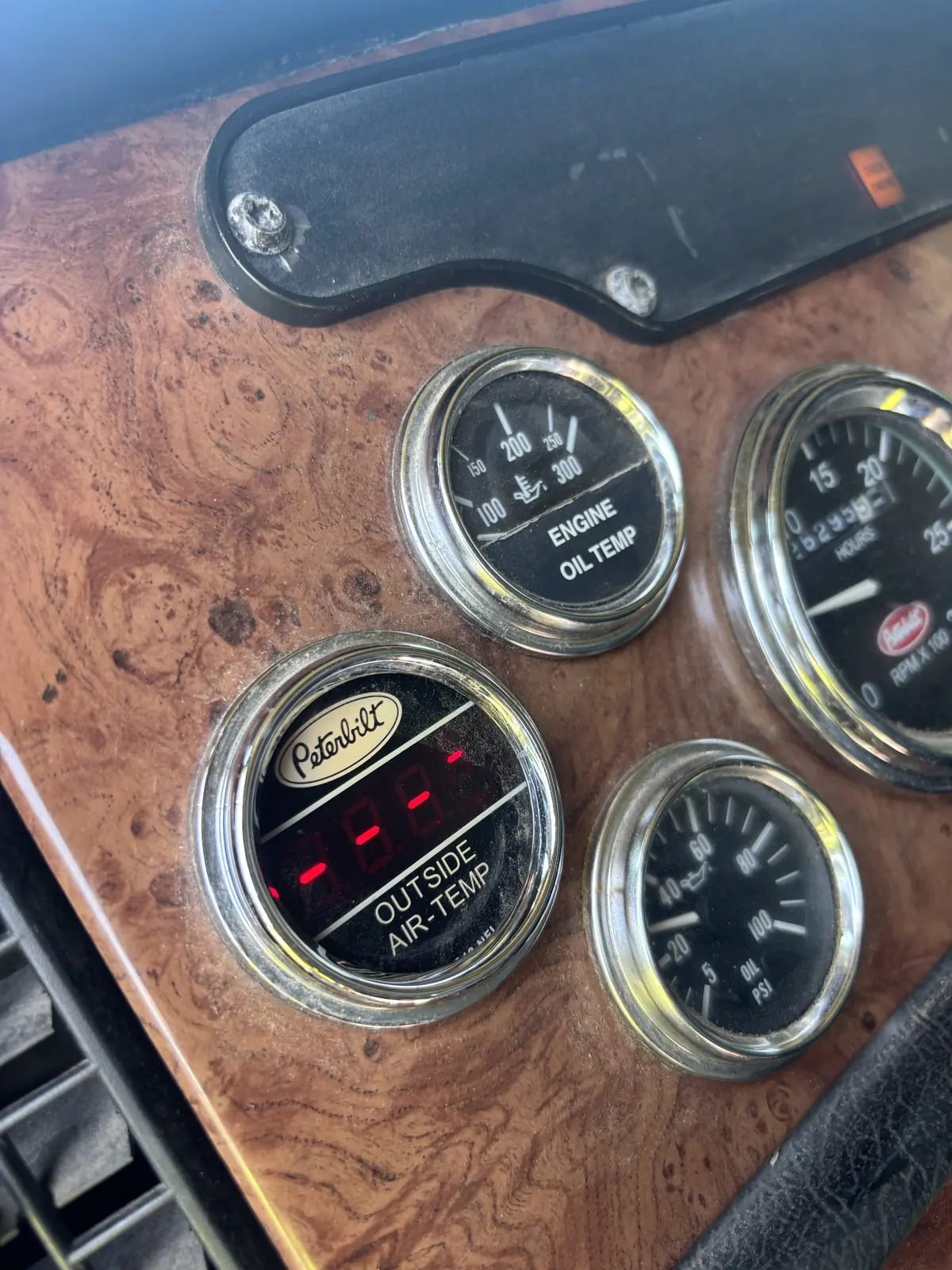
Most heavy-duty engines have a coolant level sensor in the surge tank and an oil pressure sensor that feed a warning lamp, and on many trucks and most equipment, an engine protection shutdown that derates or stops the engine when a limit is crossed. What they protect against is straightforward. A cracked coolant hose on a hot August day empties the system in minutes; a coolant temperature gauge alone reads low once the coolant is gone because there is nothing left to measure, and the first sign is a seized engine. The level sensor catches it while there is still coolant in the block. Low oil pressure from a failed pump, a plugged pickup, or a spun bearing takes an engine apart in under a minute at highway rpm; the shutdown gives it a chance. Keep these working: a sensor that has been unplugged because it "kept going off" is a cracked head waiting to happen. Test the lamps at every PM and treat a fault code on the sensor circuit as a repair, not a nuisance.
Brake Stroke Indicators
A pushrod stroke indicator is a marker on the chamber pushrod, either a molded collar or an orange band, that becomes visible when the stroke exceeds the adjustment limit for that chamber. A driver can see it on the walkaround without crawling under the truck with a ruler. Brake adjustment is checked at every roadside inspection, and it is one of the two or three most common reasons a truck is placed out of service. The indicator only helps if the driver knows to look for it and the chamber has one; retrofit indicators are inexpensive and fit most chambers. See our brake replacement guide for stroke limits by chamber type and the 90-psi applied stroke check.
Automatic Slack Adjusters
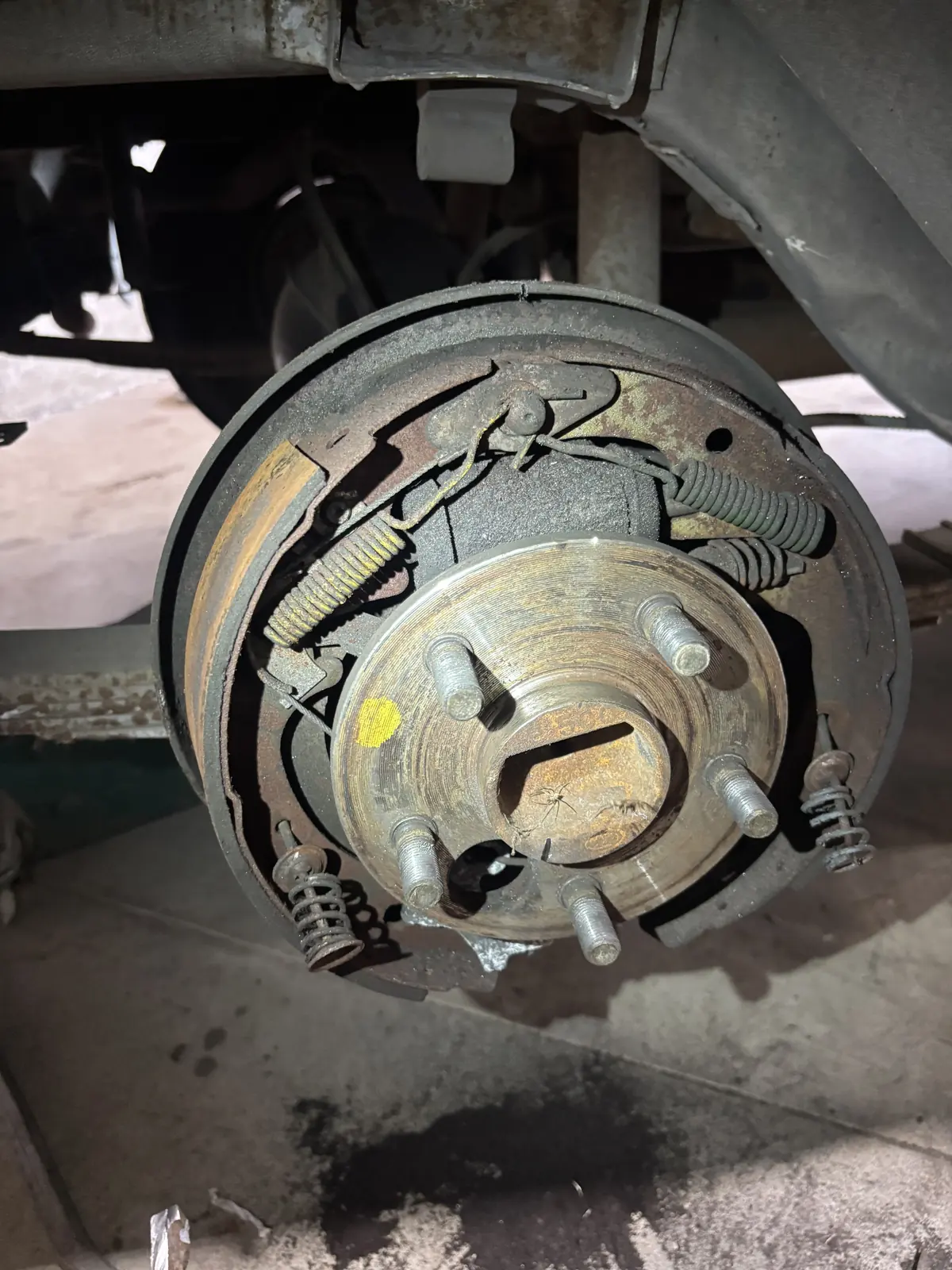
Required on air-braked trucks and trailers built since October 1994, automatic slack adjusters take up lining wear so pushrod stroke stays inside the limit. They fail in two ways: the internal adjusting mechanism wears out and stops adjusting, or the foundation brake underneath them (cam bushings, rollers, return springs) wears so far that the adjuster cannot keep up. In either case the wrong fix is to adjust them by hand. Manual adjustment hides the problem until the next inspection, and an adjuster that needs manual adjustment is by definition broken. Grease them at every PM, and if stroke is long, find out why.
ABS and the ABS Lamp
Antilock brakes have been required on air-braked tractors and trailers since the late 1990s. The system does nothing until a wheel locks, so a broken tone ring or a sensor pushed out of position by a loose wheel bearing goes unnoticed until a panic stop. The ABS malfunction lamp is the check. On a trailer, the lamp is on the driver's side, and a lamp that stays lit, or a lamp that does not come on at all at key-on, is a violation.
LED Lighting
Lighting violations are among the most common write-ups at roadside inspections because an incandescent bulb can fail between the pre-trip and the scale house, and a driver cannot see a dead marker lamp from the seat. LED lamps fail rarely, do not mind vibration, and draw a fraction of the current, which matters on a trailer with a corroded 7-way connector. What they do not fix is the wiring: a corroded pigtail, a ground through a rusty mounting bolt, or a chafed harness on the trailer crossmember will take out a string of LEDs just as easily. Under 49 CFR 393, every required lamp and reflector must be present and working; a single dead clearance lamp is a violation on a vehicle that is otherwise perfect.
Dash Cameras
A forward-facing camera does not prevent a crash, but it settles who caused one. When a passenger car cuts across three lanes and brakes in front of a loaded truck on I-244, the video is the difference between a claim and a lawsuit. Driver-facing cameras are a policy decision for each fleet; the forward camera is close to a no-brainer.
Telematics and ELD-Integrated Fault Reporting
Most electronic logging devices plug into the truck's J1939 data bus and can report active fault codes to a fleet dashboard along with hours of service. That means a low coolant level fault, an aftertreatment fault that will derate the truck in a few hundred miles, or a low battery voltage fault gets to the fleet manager while the truck is still moving, instead of showing up as a breakdown call. The value depends on someone actually watching the alerts and on the shop knowing what SPN and FMI numbers mean (see diagnostics); a code that sits unread for a week is no better than no code.
The Simple Ones
- Emergency equipment: a charged fire extinguisher, three warning triangles, and spare fuses are required on commercial vehicles under 49 CFR 393.95, and the extinguisher gauge is one of the first things an inspector looks at.
- Wipers, washers, horn, and mirrors: cheap, required, and the easiest violations to avoid. Replace wiper blades before the annual inspection instead of after it.
Keeping the Systems Working
Every one of these systems ends at a lamp, a gauge, or a sensor, and every one of them fails silently. The habit that keeps them working is a bulb check at key-on (every warning lamp should light and then go out), a walkaround that includes the trailer ABS lamp and the stroke indicators, and a PM that tests the sensors rather than assuming they are fine because nothing has gone off. The annual inspection is the natural time to verify all of it.
Need These Systems Checked On-Site in Tulsa?
Tulsa Fleet Repair is a mobile operation — the service truck comes to your yard, jobsite, or breakdown location anywhere within 120 miles of Tulsa, with 24/7 emergency response when a unit can't wait. Call (918) 925-9356 or request service online.