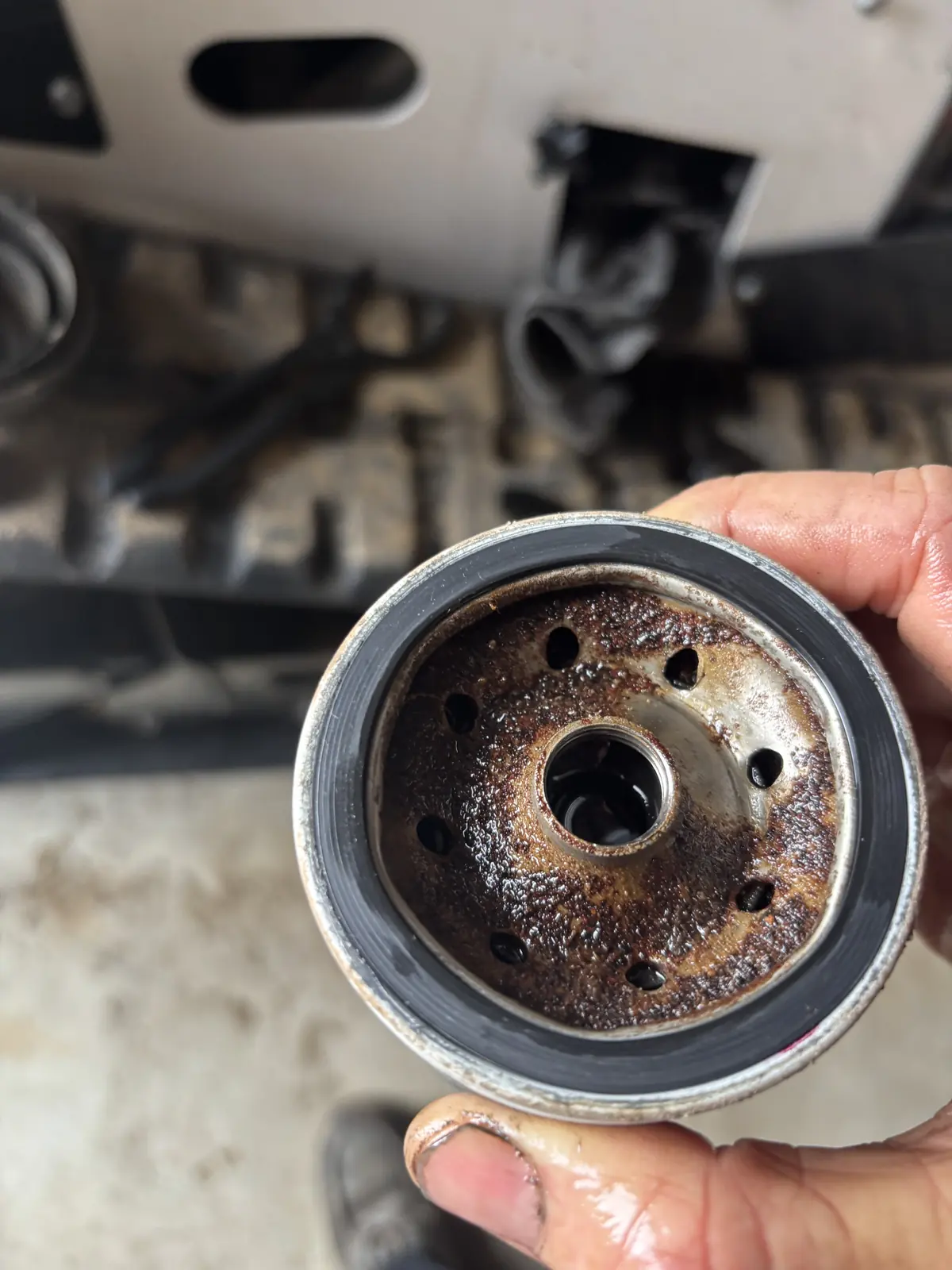
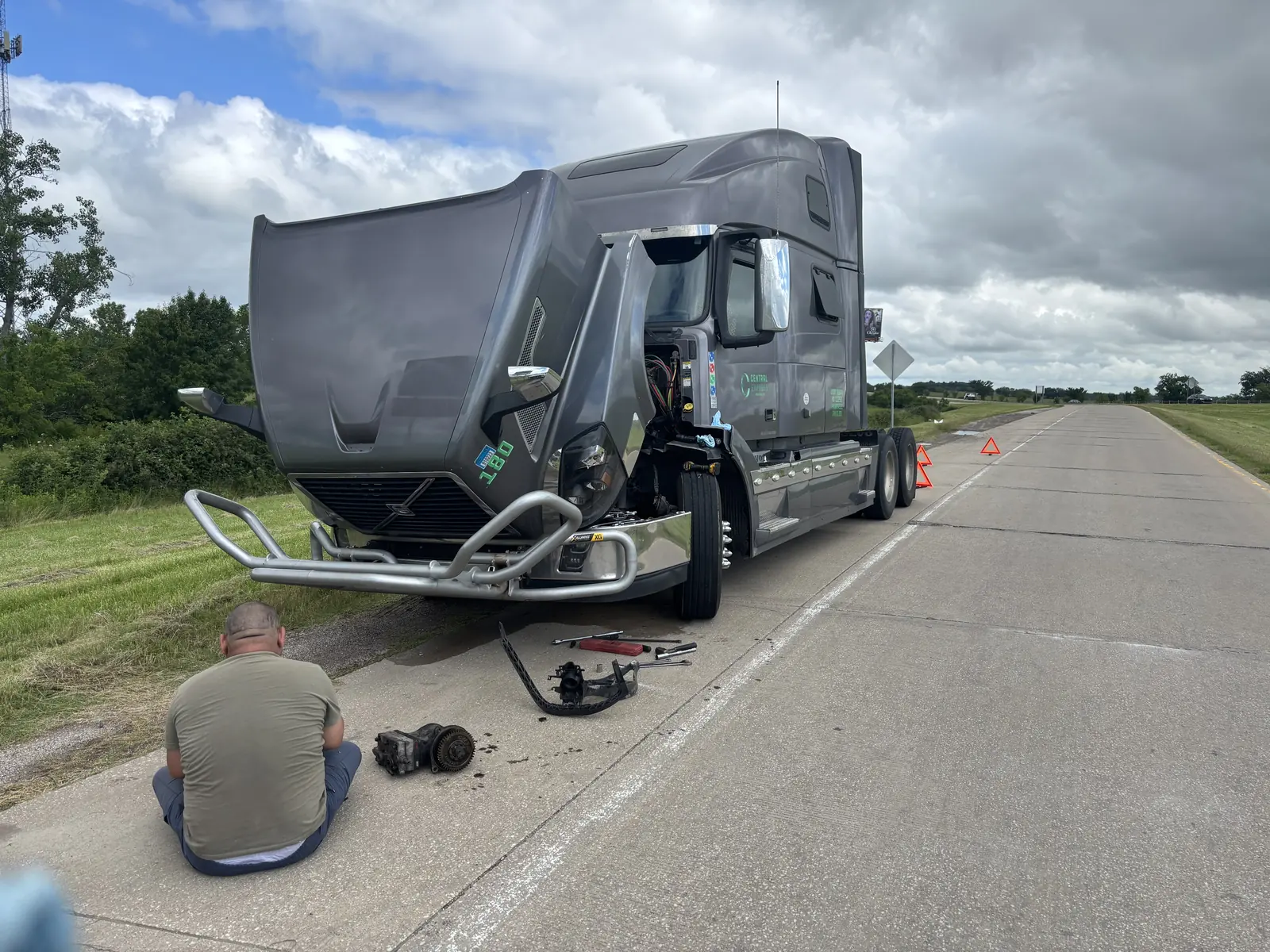
A mobile diesel mechanic brings the shop to the truck: diagnostics, parts, air, power, lifting, and welding, on a service truck that can get to a yard in Owasso, a jobsite outside Sand Springs, or the shoulder of the Turner Turnpike. Most of what sidelines a diesel truck or a piece of equipment can be fixed where it sits. This is an honest rundown of what that looks like: what is on the truck, what gets fixed on-site, what has to go to a bay, how an emergency call runs, and what to have ready when you dial.
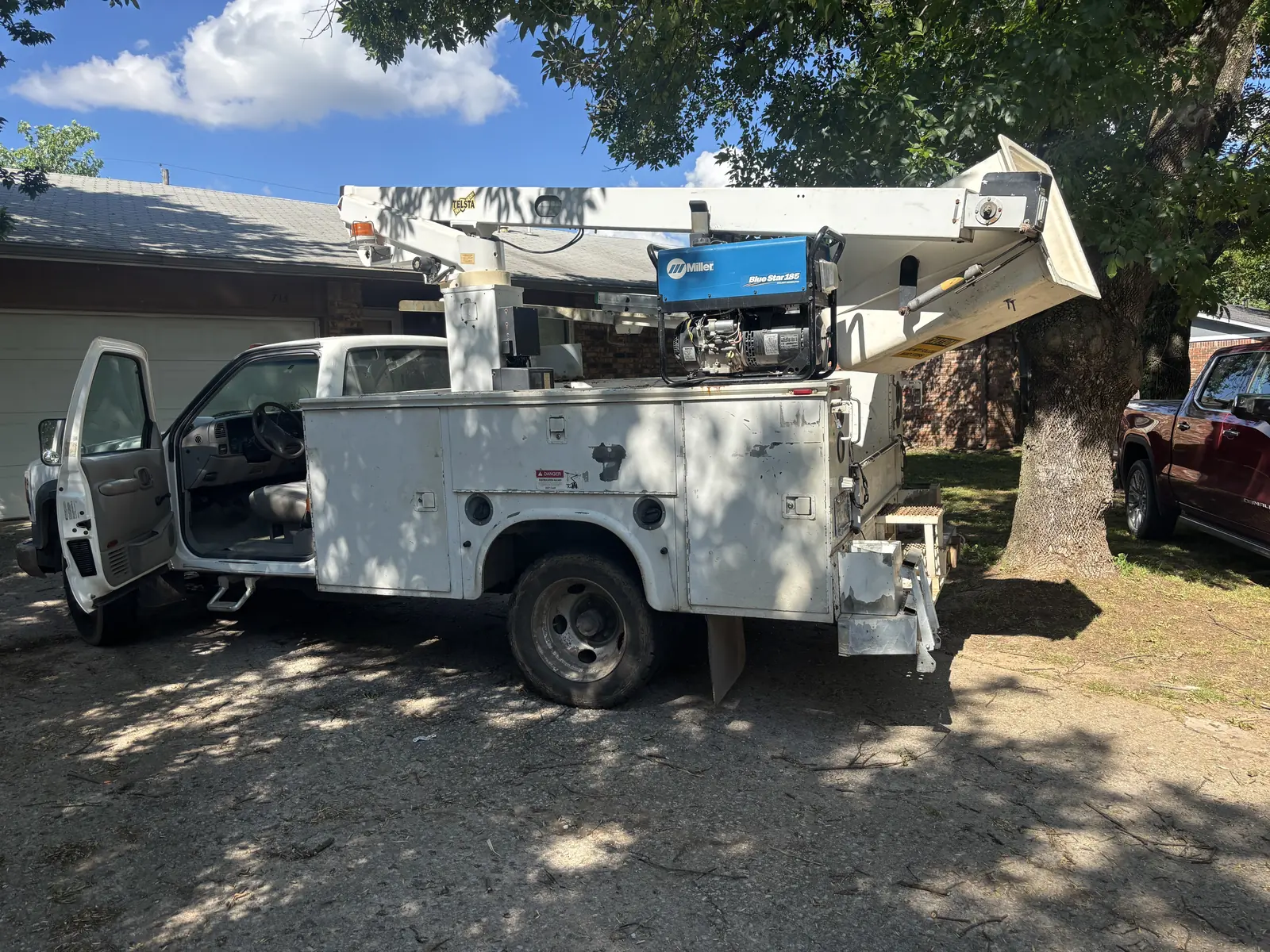
What Is On the Service Truck
A fully equipped service truck has to be self-sufficient for a full day away from the shop. That means:
- Diagnostics: a laptop with OEM and multi-brand software for J1939 heavy trucks, Ford and GM light-duty diesels, and the common equipment engines (CAT, Cummins, Kubota, Deutz, Yanmar), plus the adapters for a 9-pin Deutsch, an OBD-II port, or a CAT ET connector
- Air and power: compressed air for impacts and brake work, electrical power for lights and tools, and enough boost capacity to start a Class 8 with four flat Group 31s
- Lifting: a crane for pulling a wheel end, a transmission, or a skid steer engine, and jacks and stands rated for a loaded truck
- Welding, hydraulic hose and fittings, and stock: common filters, belts, batteries, brake chambers, air fittings, coolant, and DEF
What Gets Fixed On-Site
No-start and no-crank diagnosis
The most common emergency call. Battery voltage and cranking draw first, then the chain: starter and solenoid, ignition and ECM power and grounds, crank and cam signals, fuel supply. On a Cummins or Detroit that means confirming rail pressure on the tool; on a HEUI Powerstroke, injection control pressure. Most no-starts end with batteries, cables, a starter, a fuel filter or lift pump, or a sensor, all fixed roadside.
Batteries, starters, alternators
Load test, voltage-drop test on every cable and ground, replace what fails, clean and protect the terminals. A charging complaint gets a ripple test and an output test under load before the alternator is condemned; a bad frame ground fools a lot of people.
Fuel system
Primary and secondary filters, water separators, priming, lift pumps, cracked lines and suction-side air leaks. Gelled fuel in a cold snap gets the filters swapped, the fuel treated, and the truck warmed until it flows.
Belts, hoses, cooling
Serpentine belts, tensioners, idlers, coolant hoses, thermostats, water pumps, and radiator replacement on most trucks and equipment. A pressure test and a look at the fan clutch come standard with any overheating complaint.
Hydraulic hoses
A blown hose on an excavator, telehandler, or dump body is a jobsite stopper and one of the easiest things to fix on-site. The hose is replaced, the system bled, and the reason it blew found (chafe, a bad clamp, a cylinder bottoming out). See excavator repair for tracked machines.
Wheel ends and brakes
Brake chambers, slack adjusters, shoes and drums, wheel seals, bearings, and air leaks on Class 8; pads, rotors, and calipers on light and medium duty; the DVIR write-ups that keep a truck from passing a pre-trip. Endplay is set with a dial indicator, not by feel.
Welding
Cracked brackets, broken steps and fenders, equipment frame cracks, bucket edges and teeth, exhaust and tank hangers.
Preventive maintenance
Oil and filters, grease, coolant test, air dryer cartridges, brake stroke check, lights, and the paperwork that satisfies 49 CFR 396.3, done in your yard while the trucks are parked anyway. See preventive maintenance.
What Has To Go To a Bay
- In-frame overhauls and cylinder head work on heavy-duty engines
- Head gaskets on a 6.0 Powerstroke (cab-off), most Class 8 transmission and clutch jobs
- Off-truck DPF ash cleaning
- Alignment, frame straightening, king pins
- Anything that needs the unit stripped down over several days in a clean, dry space
The mechanic's job is to diagnose first, so a truck goes to a bay for a known repair, not for a second diagnosis. Sometimes the answer is a road-legal temporary fix that gets the truck off the turnpike and to the shop under its own power.
How a 24/7 Emergency Call Works
- You call (918) 925-9356. Give the details in the next section; the more specific you are, the better the odds the right part is on the truck when it arrives.
- Triage on the phone. Is the unit in a safe spot? Is the driver safe? No-start, limped to a shoulder, or stuck? Codes read off the dash over the phone save a trip back for a part.
- Dispatch and ETA. A realistic time, based on where the unit is inside the 120-mile radius and what is already on the board.
- On-site diagnosis. Confirmed with a tool, not a guess. You are told what it is, whether it can be fixed on-site, and roughly what it will take before work starts.
- Repair and verification. Proven on a road test or run cycle with live data; the unit leaves under its own power or is set up for a controlled tow.
The emergency repair page has more on after-hours response. Sunday is emergency-only.
What To Have Ready When You Call
- Unit: year, make, model, engine (a 2019 Freightliner Cascadia with a DD15; a 2015 F-350 with the 6.7; a CAT 308 mini excavator), and the unit number
- Location: exact. A mile marker on I-44, a cross street, a gate code, a jobsite name and the nearest town. Drop a pin if you can.
- Symptoms: what it did, in order. Died at speed and won't restart, cranked and wouldn't fire this morning, lost power on the hill and went into derate, air pressure won't build.
- Codes and warnings: anything on the dash, and if the driver can pull codes from the cluster menu, the SPN/FMI numbers on a heavy truck or P-codes on a light-duty
- What has been tried: jumped it, swapped a filter, added fuel, reset something
- Load and safety: loaded or empty, hazmat, whether the unit is fully off the roadway
Roadside Safety on I-44, US-75, and the Turnpikes
The repair is the easy part; the shoulder is where people get hurt. Until the mechanic arrives:
- Get the unit as far right as it will go. On the turnpikes and much of I-44 the shoulder is narrow and traffic runs 75 mph. If it can limp to an exit, a ramp, or a wide spot, that beats the shoulder.
- Hazard flashers on, then warning triangles per 49 CFR 392.22 within 10 minutes: one 10 ft behind on the traffic side, one about 100 ft behind, one about 100 ft ahead (all three behind at 10, 100, and 200 ft on a divided highway).
- Stay out of the cab if the truck is close to the travel lane, and off the traffic side of the vehicle. Behind the guardrail beats beside the truck. Vest on before you get out.
- In Oklahoma, dial *55 from a cell phone to reach the Highway Patrol if the vehicle is creating a hazard.
- On the Creek and Turner turnpikes, note the nearest mile marker or last toll plaza so the mechanic and any troopers can find you.
A mobile mechanic may ask for the unit to be moved, or for a controlled tow to a safer spot, before any work under it starts. That is not stalling; that is the job being done right.
FAQ
Can a mobile mechanic work on equipment, not just trucks?
Yes. Excavators, skid steers, dozers, telehandlers, boom and scissor lifts, forklifts, tractors, and combines are most of the jobsite calls, because none of them can drive to a shop anyway.
What if the part isn't on the truck?
The diagnosis is done, the part is sourced from a local supplier, and the mechanic comes back to install it. Being specific on the phone about the unit and the symptom is what keeps that to one trip.
Do you cover Oklahoma City?
Oklahoma City sits at the far edge of the 120-mile radius. See mobile mechanic in Oklahoma City for how that works.
Need a Mobile Diesel Mechanic in Tulsa?
Tulsa Fleet Repair is a mobile operation — the service truck comes to your yard, jobsite, or breakdown location anywhere within 120 miles of Tulsa, with 24/7 emergency response when a unit can't wait. Call (918) 925-9356 or request service online. More on how it works at mobile mechanic service.