A pump truck in a Tulsa July is two machines fighting the same heat: a diesel chassis idling for hours, and a hydraulic system running a concrete pump, a vacuum blower, or a water pump at full load in air already over 100°F, with none of the airflow it would get on the highway. The failures are predictable: overheated hydraulic oil, cooked seals, a cooling system that was marginal in May, batteries that quit in September, and pump wear that accelerates when the truck idles hot. This checklist stays ahead of them.
Cooling System
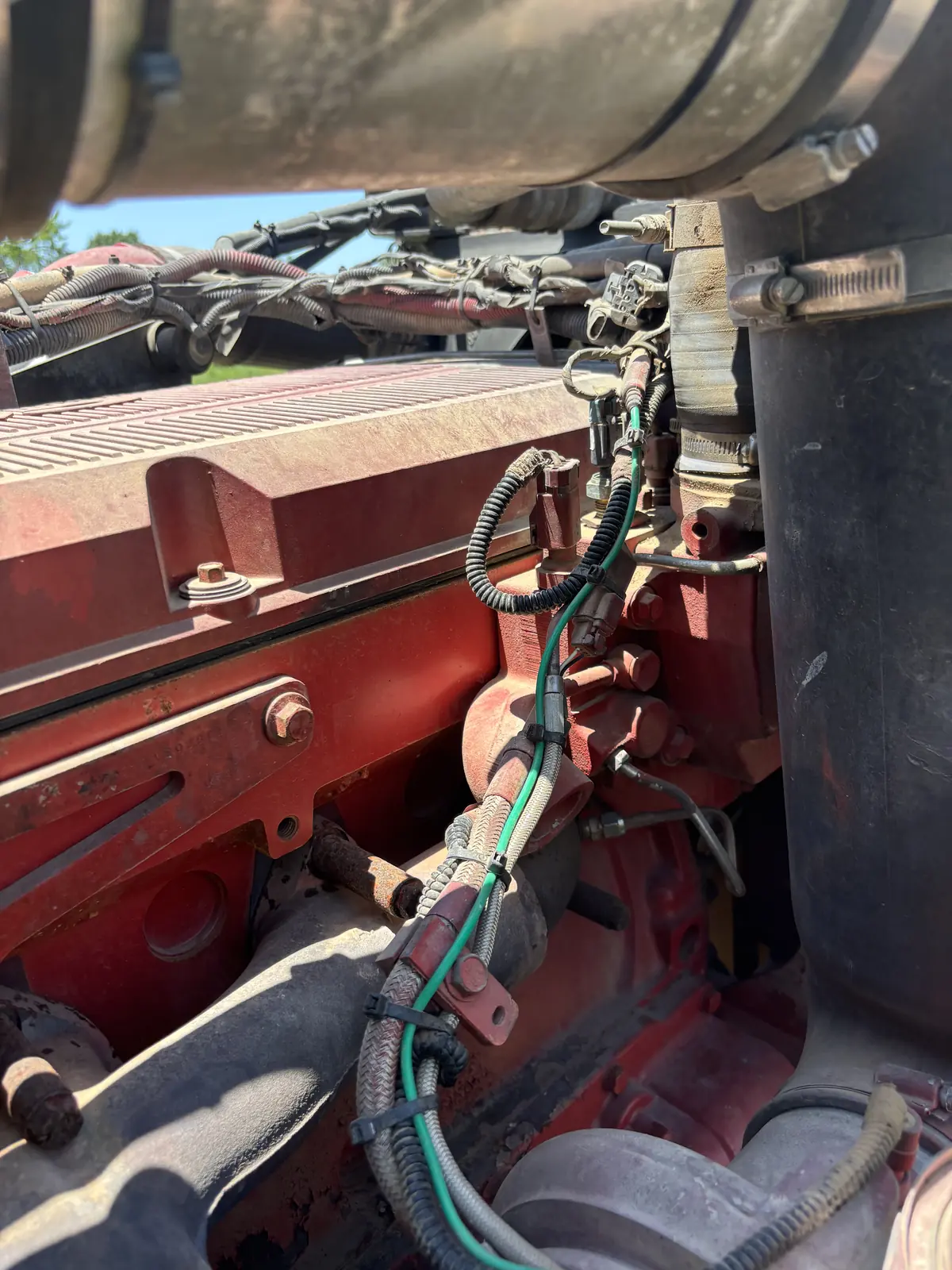
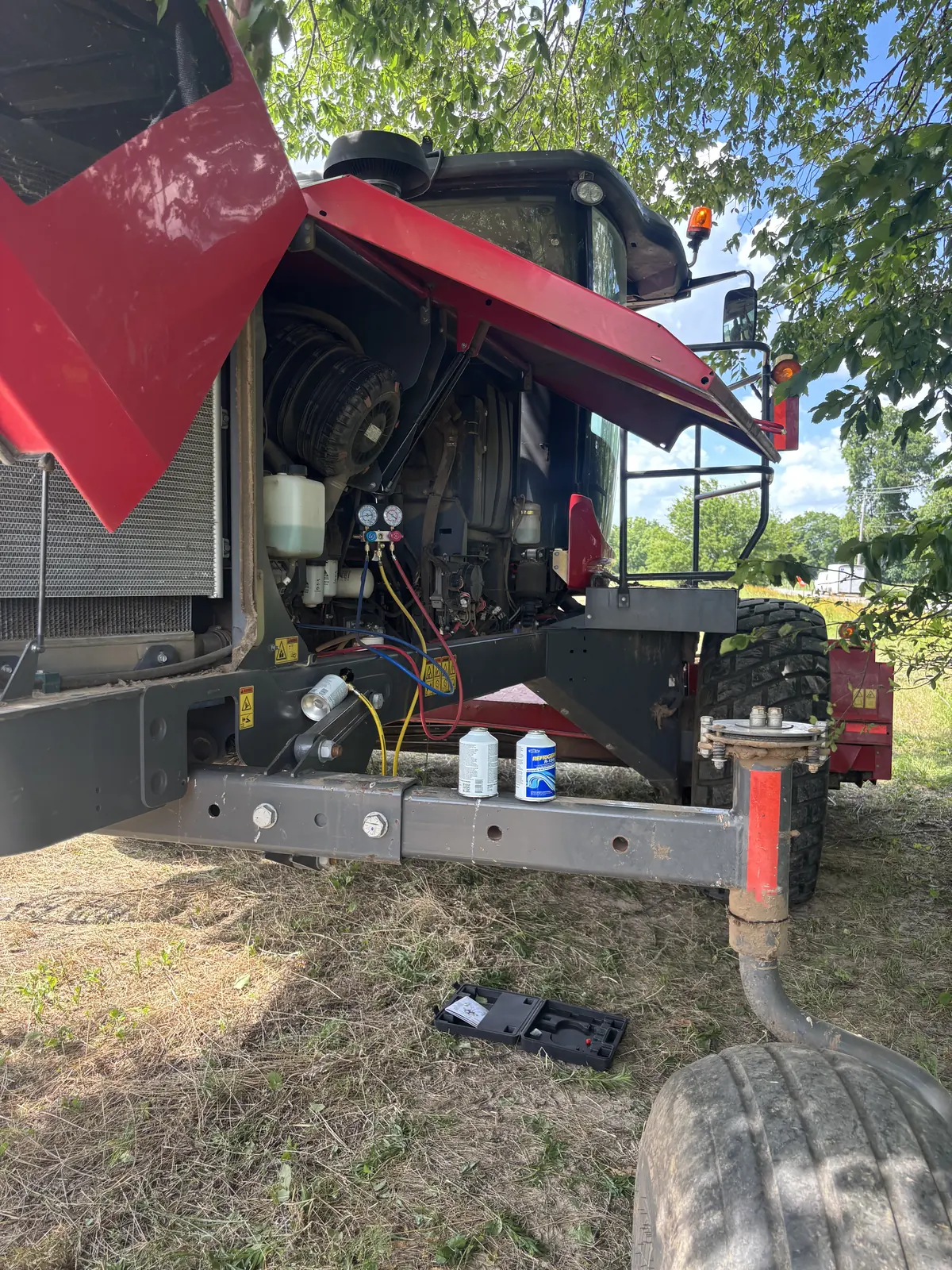
The chassis engine runs on the PTO at high idle for hours with no ram air, and the radiator, charge-air cooler, and hydraulic oil cooler are stacked together catching the same dust, concrete splatter, and cottonwood fluff.
- Blow out the cooling stack from the engine side, not just the front, weekly in summer. Concrete slurry on the fins has to be washed, not blown.
- Test coolant freeze and boil protection and, on conventional coolant, SCA level with a strip. Top up with the same chemistry, never a mix.
- Pressure-test the system and the cap. A cap that vents at 10 psi instead of 15 lowers the boiling point and shows up as a puking degas bottle on the first 100°F day.
- Confirm the fan clutch or hydraulic fan drive engages under load. A fan that never locks up is the most common overheating cause on a PTO truck.
- Check the lower radiator hose for softness and the water pump weep hole for crust.
Hydraulic Oil: Temperature and Viscosity
Hydraulic oil is the working fluid and the coolant for the pump, the valves, and the cylinders. Above about 180°F it oxidizes fast, varnishes valve spools, and thins out enough to lose pressure and starve the pump. A rough rule in the trade: every 18°F above 140°F roughly halves the oil's life.
- Know the operating temperature. If there is no gauge, an infrared thermometer on the reservoir after an hour of pumping tells you. Sustained readings over 180°F mean the cooler is dirty, the fan is weak, or the oil is wrong.
- Run the OEM summer viscosity. Many concrete pumps and vac trucks list ISO VG 46 as standard and allow VG 68 for hot weather; check the manual, because a 68 in a machine built for 46 starves the pump on a cool morning.
- Change the oil on hours, not looks. Dark, burnt-smelling oil or a varnished sight glass means it went too long.
- Replace return and pressure filters at the interval and after any overheating event; check the bypass indicator on the first hot day.
- Keep the reservoir at the full mark; low oil means less thermal mass and more heat per gallon.
Hoses and Seals
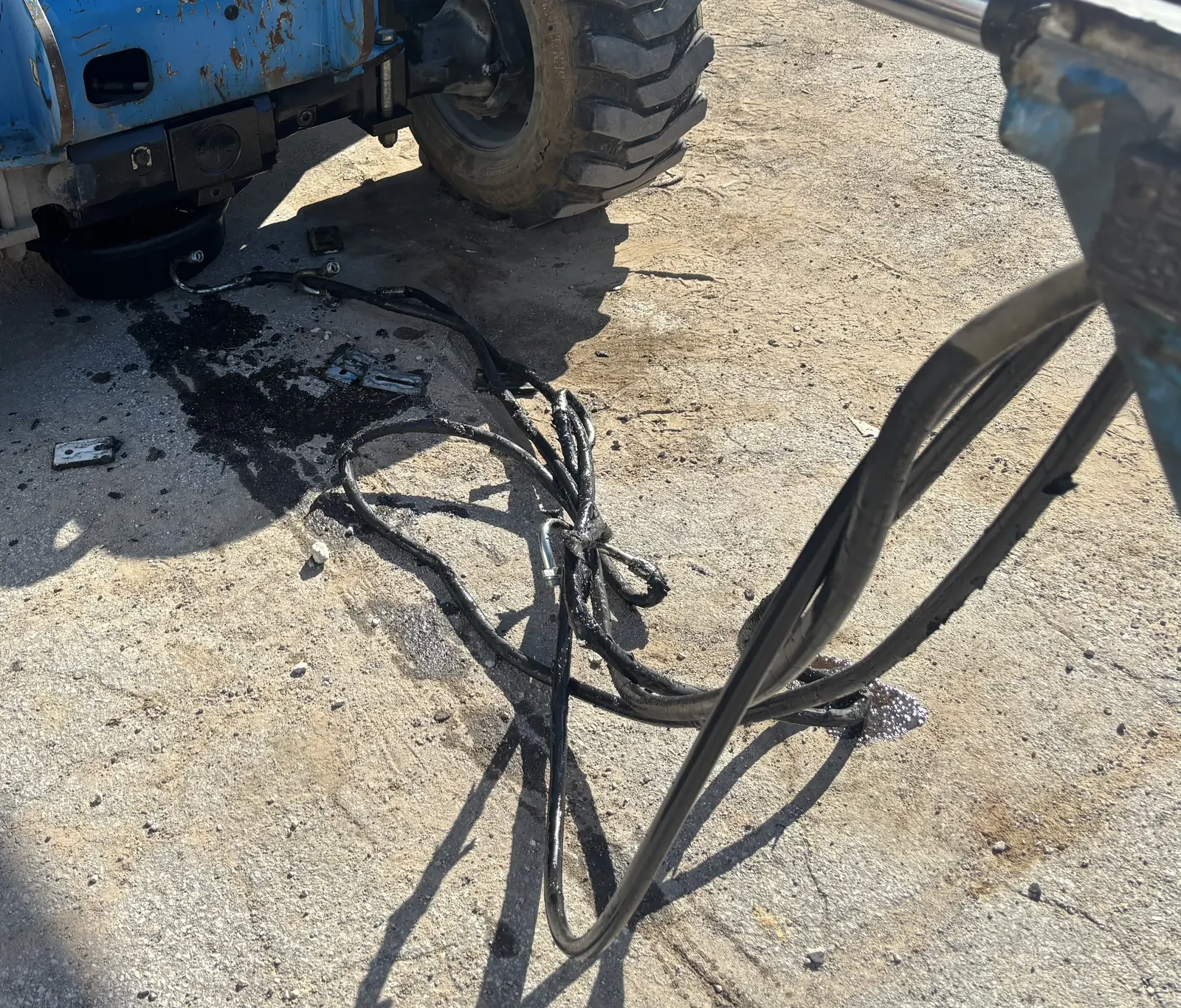
- Inspect every hydraulic hose for cover cracking, blistering, chafe at clamps and boom pivots, and wetness at the crimp. Heat hardens the cover; cracks come first, the burst later. Walk the boom fully extended and look at every bend.
- Cylinder rod seals weep first in heat. A wet rod on an outrigger or boom cylinder is a seal on the way out and a leak-down problem in the making.
- Concrete delivery line gaskets and clamps dry out and crack; replace them before the season, not when one blows out on a pour.
- Vac truck door seals, debris tank gaskets, and hose cuffs crack in the sun. A tank that won't hold vacuum on a hot day is usually a seal problem, not a blower problem.
Batteries in Heat
Heat kills batteries; cold is just when they get caught. Grid corrosion and water loss accelerate above 90°F, and a truck that starts fine all summer quits on the first cool morning in October.
- Load test every battery at the start of summer and again in September.
- Check electrolyte on flooded batteries monthly; distilled water only.
- Clean and coat terminals and check hold-downs; a battery that vibrates on a pump chassis sheds plate material.
- Check charging voltage hot (13.8–14.4 V on a 12 V system). A regulator that overcharges in heat boils batteries.
Tires
- Set cold pressures to the load rating before the truck rolls; pressures climb 10 psi or more in a hot day and should not be bled down.
- Look for sidewall cracking, cupping, and separation on the drive and tag axles, which carry the boom weight in transit.
- Check dual spacing and matched sizes; a mismatched dual runs hot on the Broken Arrow Expressway in August.
PTO and Pump Wear
- Check the PTO for leaks at the shaft seal and shift cylinder; a hot-shift PTO that won't engage cleanly in heat is usually low on pressure or has a worn clutch pack.
- Grease the PTO shaft U-joints and slip yoke; a dry driveline at high rpm for hours is a bearing failure.
- Concrete pump: check wear plate and cutting ring clearance, the S-tube or rock valve, and the agitator bearings. Hot, dry concrete wears them faster; keep the water box full and clean.
- Vac blower: check the relief valve, inlet filter and cyclone, and blower oil level. A positive-displacement blower running hot from a plugged filter is a rebuild.
- Hydro-excavation and water trucks: listen for cavitation (hot tank water cavitates the pump sooner), keep the strainer clean, and check the pump seal; a seal that drips in the yard sprays at road speed.
Outrigger and Boom Hydraulics
- Leak-down test the outriggers: set up, load the boom, mark the cylinder rods. Any drift in 15 minutes is a pilot-operated check valve or a piston seal, and a safety problem before it is a maintenance one.
- Grease boom pivots, turret bearing, and outrigger slides daily in dusty summer work; the grease is what keeps grit out.
- Check boom cylinder holding valves and the emergency stop; test the remote and the wired backup.
- Check turret bolts and boom pin retainers; heat cycling loosens what vibration started.
Wash-Down and the Day's End
- Wash concrete off the boom, hopper, and delivery line before it sets; dried concrete on a cylinder rod is a seal killer.
- Wash the cooling stack and hydraulic cooler from the engine side at low pressure, and never spray a hot reservoir or a hot engine with cold water.
- Drain the vac debris tank and rinse the door seals; empty the water separator on the blower inlet.
- Park with the boom stowed and outriggers retracted; a boom left up overnight is a leak-down test nobody watches.
- Idle two to three minutes off the PTO before shutdown so the turbo and the hydraulic oil come down together.
FAQ
What hydraulic oil temperature is too hot?
Sustained readings above 180°F at the reservoir. Most systems are designed to run 120–160°F; past 180°F on a normal pour, the cooler, the fan, or the oil is the problem.
Should I switch to a heavier hydraulic oil for summer?
Only if the OEM lists a summer grade. Many do (VG 46 to VG 68), but a heavier oil in a machine not built for it starves the pump on cool mornings.
Can this be done at the yard?
All of it. Boom pumps, vac trucks, and water trucks are exactly the units that are hard to get to a shop, and none of this needs a bay. See construction fleet maintenance and preventive maintenance.
Need Pump Truck Service On-Site in Tulsa?
Tulsa Fleet Repair is a mobile operation — the service truck comes to your yard, jobsite, or breakdown location anywhere within 120 miles of Tulsa, with 24/7 emergency response when a unit can't wait. Call (918) 925-9356 or request service online.