Engine oil gets changed because there is a sticker on the windshield and a light on the dash. Differential oil gets changed when the differential starts howling. The items below have no reminder, no light, and no obvious symptom until they fail, which is why they get skipped for years on otherwise well-kept trucks and equipment. Here is each one, what it does, how it fails, and a working interval, with a simple tracking table at the end.
Differential and Transfer-Case Fluid
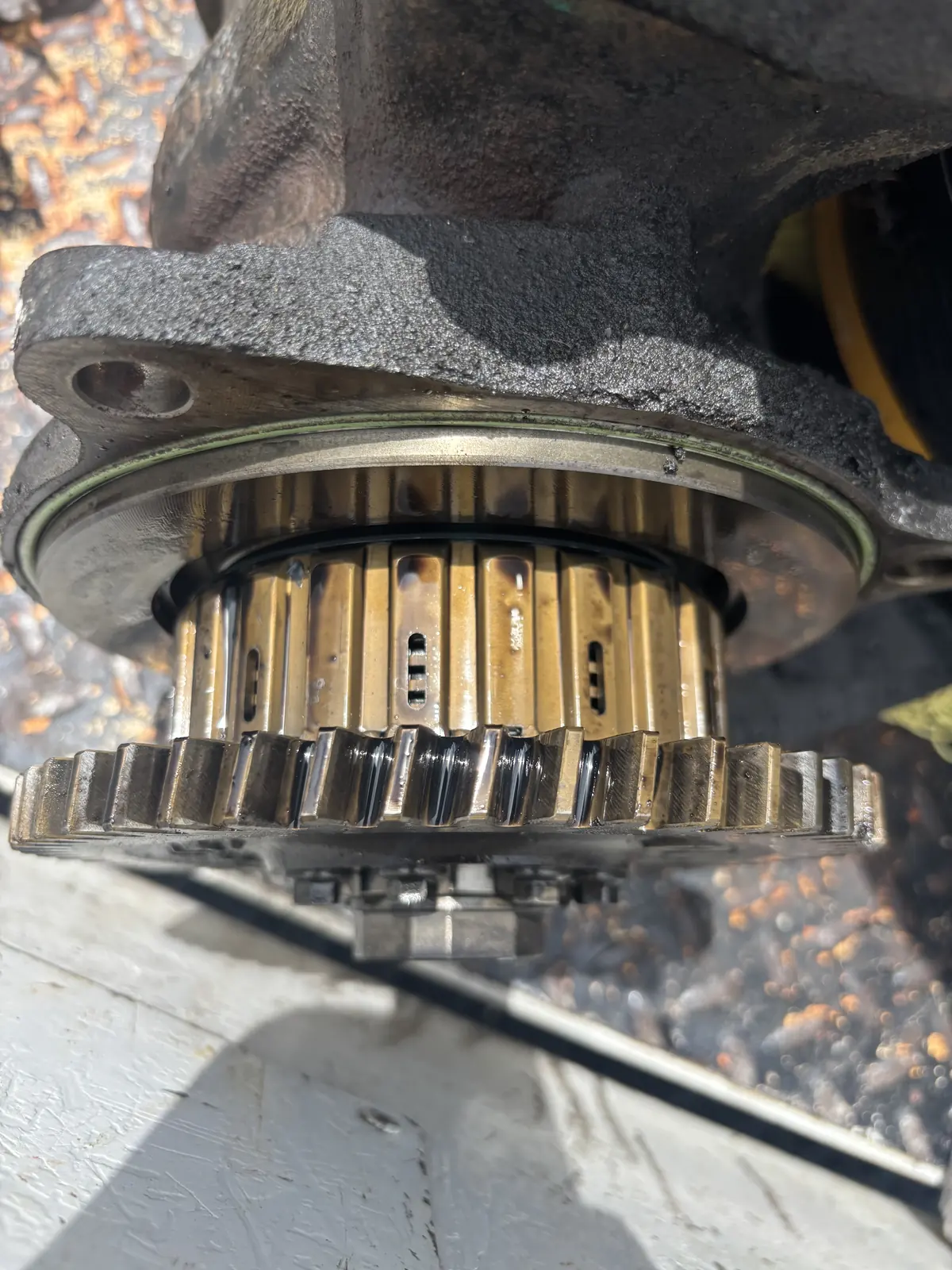
Axle oil takes the full torque of the engine through a hypoid gear set that runs hot and shears the oil. Most modern axles specify a synthetic 75W-90 gear oil meeting API GL-5, with heavy-duty axles sometimes calling for 75W-140 or 80W-140 in severe service; the axle tag or the OEM manual has the spec. Intervals by duty:
- Light-duty pickups and vans: many OEMs allow long intervals on synthetic under normal use but cut them roughly in half for towing, heavy loads, or off-pavement work; a 3/4-ton that tows every day is on the severe schedule, and 30,000–50,000 miles is a sensible change point.
- Medium-duty and Class 8: conventional oil is commonly changed around 100,000 miles; synthetic can run several times that on highway trucks. Vocational trucks (refuse, mixer, dump, oil-field) sit at the short end regardless of oil.
- Any axle: change immediately if the oil comes out milky (water past a seal or breather), metallic, or burnt-smelling.
Two things to check while the plug is out. First, the axle breather: a plugged or missing breather lets the axle build pressure when hot, pushes oil out the seals, and pulls water in when it cools after fording a creek on a lease road. Second, the magnetic drain plug or fill plug: a fine gray paste is normal; chunks are not. Transfer cases on 4x4 pickups take whatever the OEM specifies, often an ATF-type fluid, at an interval similar to the axles, and they get forgotten more than the axles do.
Power-Steering Fluid
Heavy-duty steering gears run off an engine-driven pump with a reservoir that usually contains a filter. The fluid is whatever the OEM calls for, which varies between ATF and specific hydraulic or engine oils, so read the cap. Change it when it is dark or burnt-smelling, at every pump or gear replacement, and as a rule every two years or around 100,000 miles. The symptom of neglect is a steering pump whine, then a gear that leaks and gets hard to turn at low speed in the yard.
Coolant: SCA Test Strips vs. OAT/ELC
Diesel coolant does two jobs: it moves heat, and it protects the cylinder liners from cavitation pitting that will eventually hole a liner and put coolant in the oil. How it does the second job depends on the coolant type, and mixing the two types defeats both.
- Conventional and fully formulated (usually green or pink): relies on supplemental coolant additive, mostly nitrite, that depletes in service. Test with a coolant test strip at every PM and add SCA (or use a coolant filter with a charge in it) to keep nitrite in the range the engine maker specifies. Too little and the liners pit; too much and the additive drops out as a green sludge that plugs the radiator.
- OAT and extended-life coolant (usually red or orange): uses organic acid inhibitors that do not deplete the same way and needs no SCA. Adding SCA to ELC ruins the chemistry. It still needs an extender at the midpoint of its life and a freeze-point check every fall.
- Both: check freeze point with a refractometer before winter; a 50/50 mix protects to about -34°F, which covers any cold snap Tulsa gets.
Air-Dryer Desiccant Cartridge
The air dryer takes water and oil out of the compressor discharge before it reaches the tanks and valves. The desiccant cartridge saturates and stops working without any change in how the truck drives; the first sign is water at the tank drains, and the second is a frozen valve on a 15°F January morning or a brake valve that sticks from oil contamination. Replace the cartridge annually, or at roughly 100,000 miles, and sooner on stop-and-go trucks where the compressor runs constantly. Drain the tanks at each pre-trip; if water comes out, the cartridge is done regardless of when it was last changed.
Cab Air Filter
Most trucks and nearly all equipment cabs have a fresh-air filter, and it gets forgotten because nobody sees it. A plugged filter kills AC airflow, lets the evaporator ice up, and on a pressurized equipment cab lets red-clay dust in around the door seals instead of through the filter. Replace it annually or every 15,000–20,000 miles on trucks, and every 250–500 hours on equipment working in dust.
Fuel-Water Separator
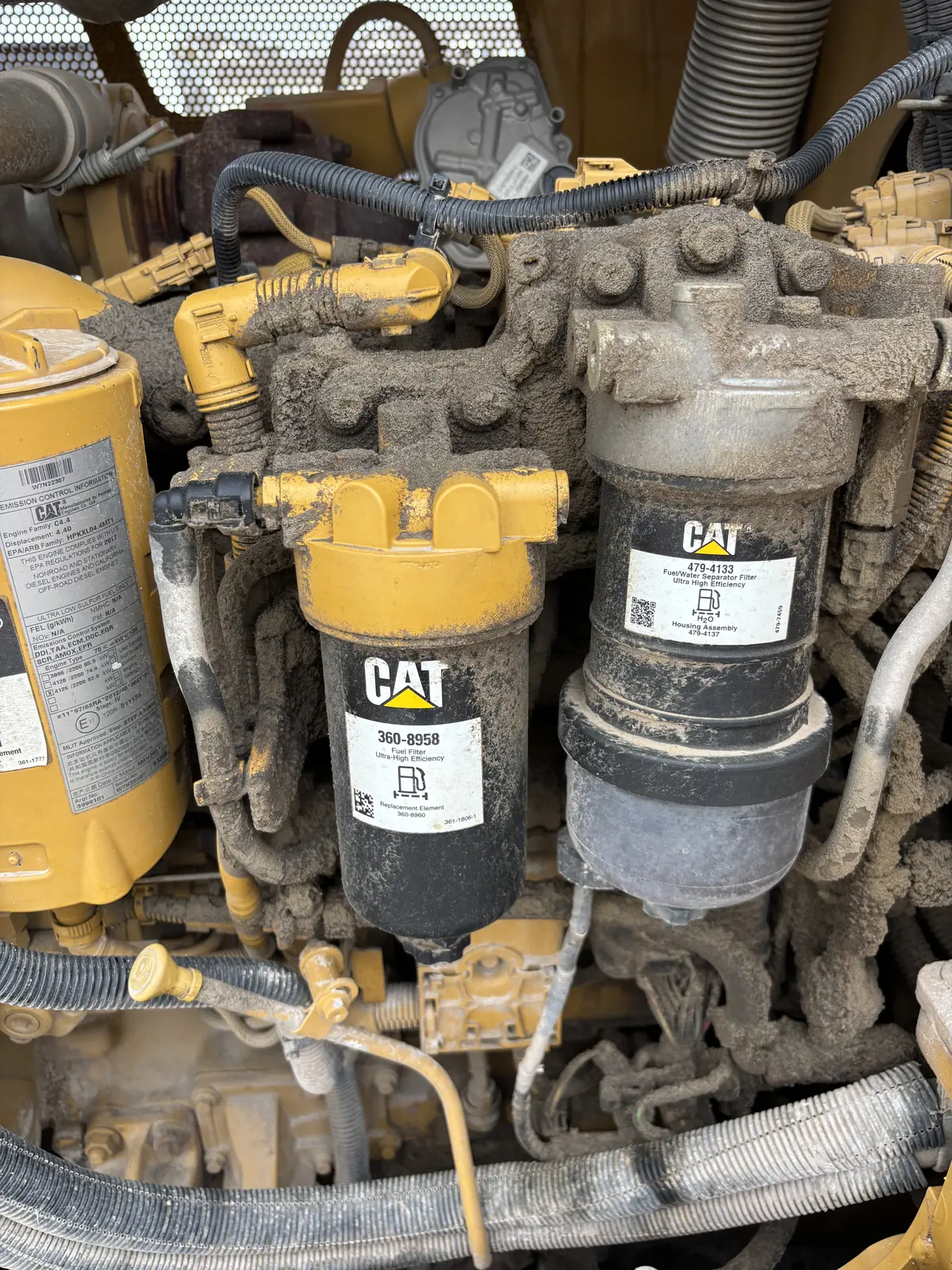
Water in diesel does not burn; it destroys injectors and, on trucks with a high-pressure common-rail pump, the pump itself, which on some light-duty engines is a repair that costs more than the truck is worth when the pump sends metal through the whole fuel system. The separator collects the water; it only works if someone drains it. Drain at every fuel-up on equipment and at least weekly on trucks, and every time the water-in-fuel lamp comes on. Replace the separator element on the fuel-filter interval, and more often on trucks fueled from a transfer tank or a jobsite tank that has been sitting through humid weather.
Hydraulic Reservoir Breather Filters
Every hydraulic reservoir on an excavator, skid steer, telehandler, or lift breathes in and out as the cylinders extend and retract, and the breather filter is what keeps the dust out of the oil. Once it plugs, the tank pulls a vacuum, the pump cavitates, and the seals start sucking dirt past them instead. Once it is missing or damaged, every cycle pulls dust straight into the tank. Replace it at the hydraulic filter interval (typically every 500 hours, or annually) and sooner on machines in dust.
Driveline Grease: Slip Yokes and U-Joints
Greaseable U-joints and slip yokes need grease at every PM, every 10,000–15,000 miles on trucks that see jobsite roads, and every 250 hours or less on equipment with driveshafts. Pump until fresh grease shows at all four bearing cap seals on a U-joint; if one cap will not purge, the joint is already dry in that trunnion and on its way out. Grease the slip yoke until fresh grease shows at the seal, then release the spline pressure by pushing the yoke in slightly.
Battery Hold-Downs, Wipers, and Washers
A loose battery walks in the box on a washboard road, cracks its case, and chafes its cable on the box edge; a hold-down takes a minute to tighten. Wiper blades, washer fluid, and a working horn are required equipment under 49 CFR 393, and a torn blade is a violation that takes thirty seconds to prevent. Replace blades every spring after the ice season and before the annual inspection.
Tracking System
None of these need software. A single sheet per unit, or one column each in the PM log, is enough if it gets filled in.
| Item | Interval (trucks) | Interval (equipment) | Last done | Next due |
|---|---|---|---|---|
| Differential / transfer-case oil | Per OEM; 30–50k mi severe, 100k+ synthetic highway | Per OEM hours; annually on axles in water/mud | ||
| Power-steering fluid and filter | 2 years / 100k mi | Per OEM | ||
| Coolant SCA test or ELC extender | Every PM; freeze point every fall | Every 250 h; freeze point every fall | ||
| Air-dryer cartridge | Annually / 100k mi | n/a | ||
| Cab air filter | Annually / 15–20k mi | 250–500 h | ||
| Fuel-water separator drain | Weekly; element at fuel-filter change | Every fuel-up; element at fuel-filter change | ||
| Hydraulic breather | n/a (unless hydraulic body) | 500 h / annually | ||
| U-joints and slip yokes | Every PM / 10–15k mi | 250 h | ||
| Battery hold-downs and terminals | Every PM | Every 250 h | ||
| Wipers, washers, horn | Every spring; before annual inspection | Every spring |
Need This Done On-Site in Tulsa?
Tulsa Fleet Repair is a mobile operation — the service truck comes to your yard, jobsite, or breakdown location anywhere within 120 miles of Tulsa, with 24/7 emergency response when a unit can't wait. Call (918) 925-9356 or request service online.