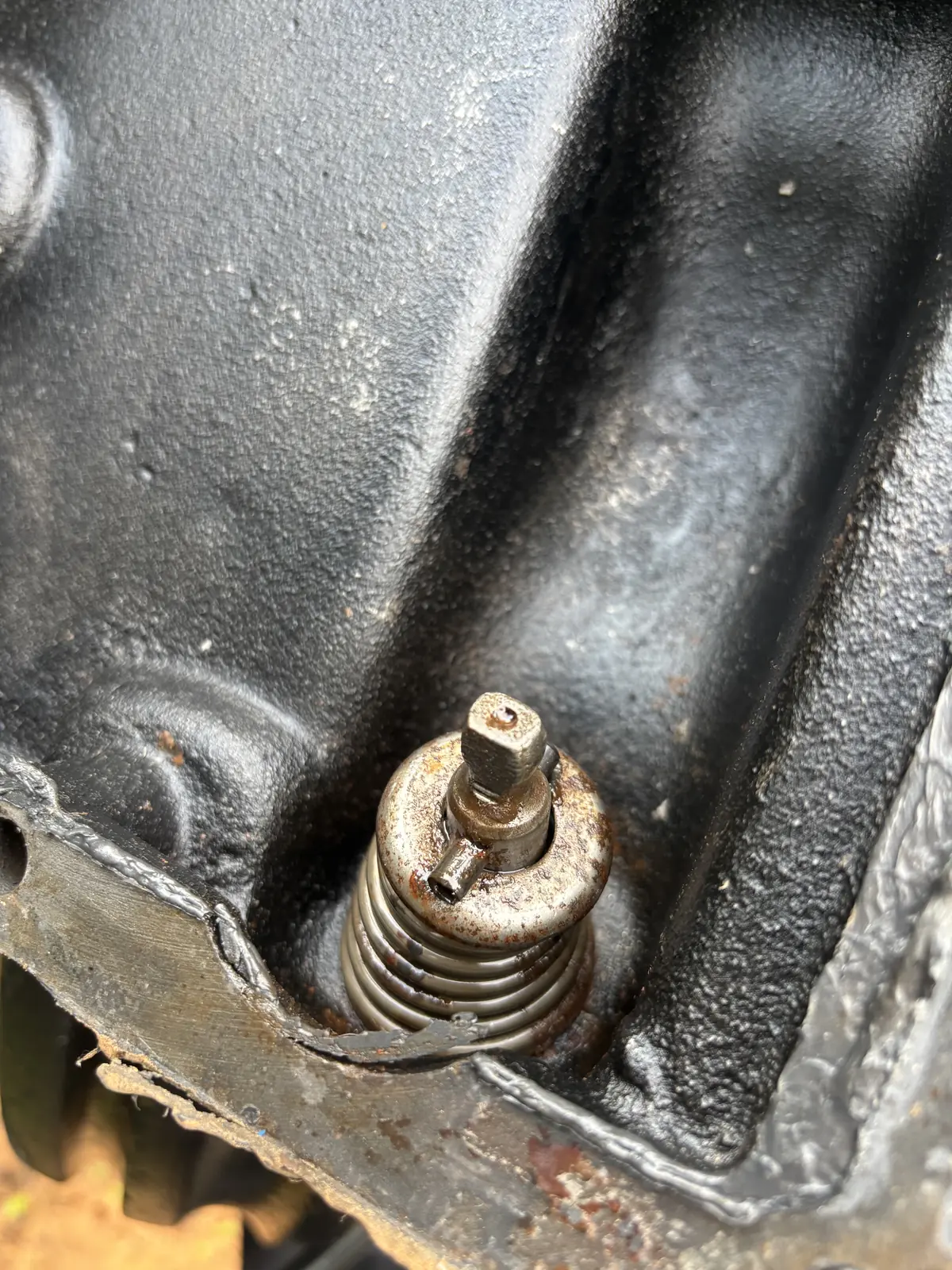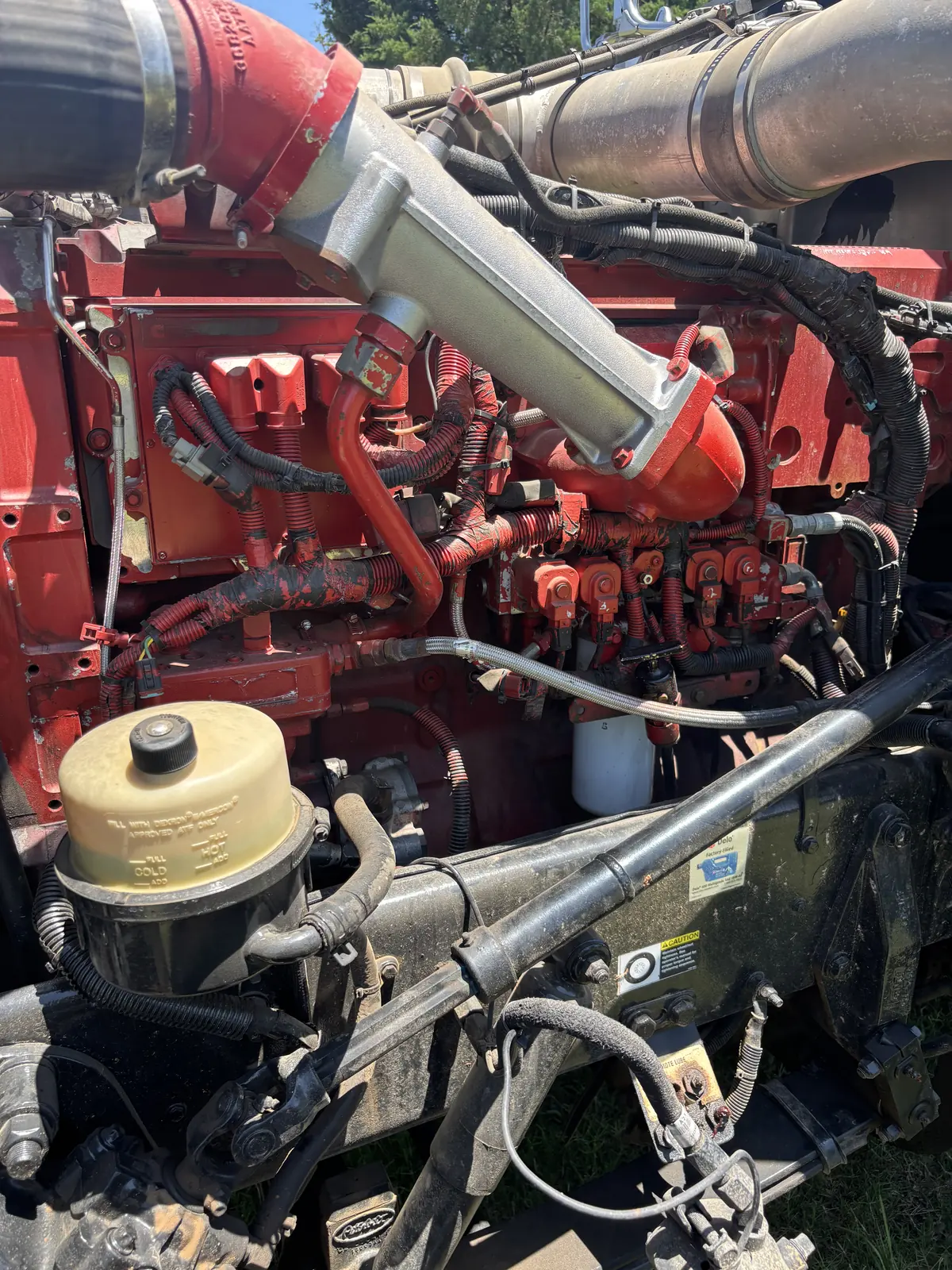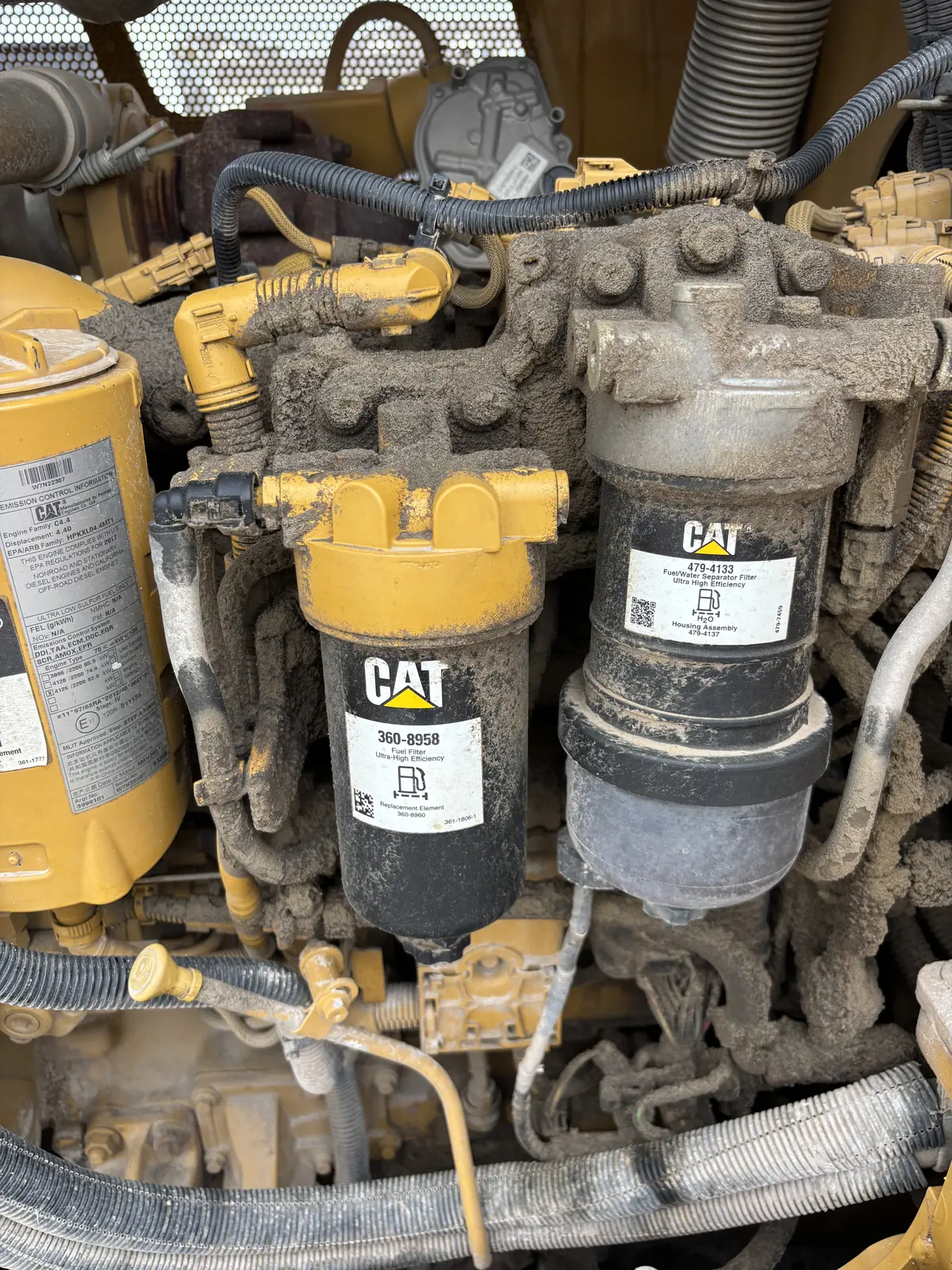
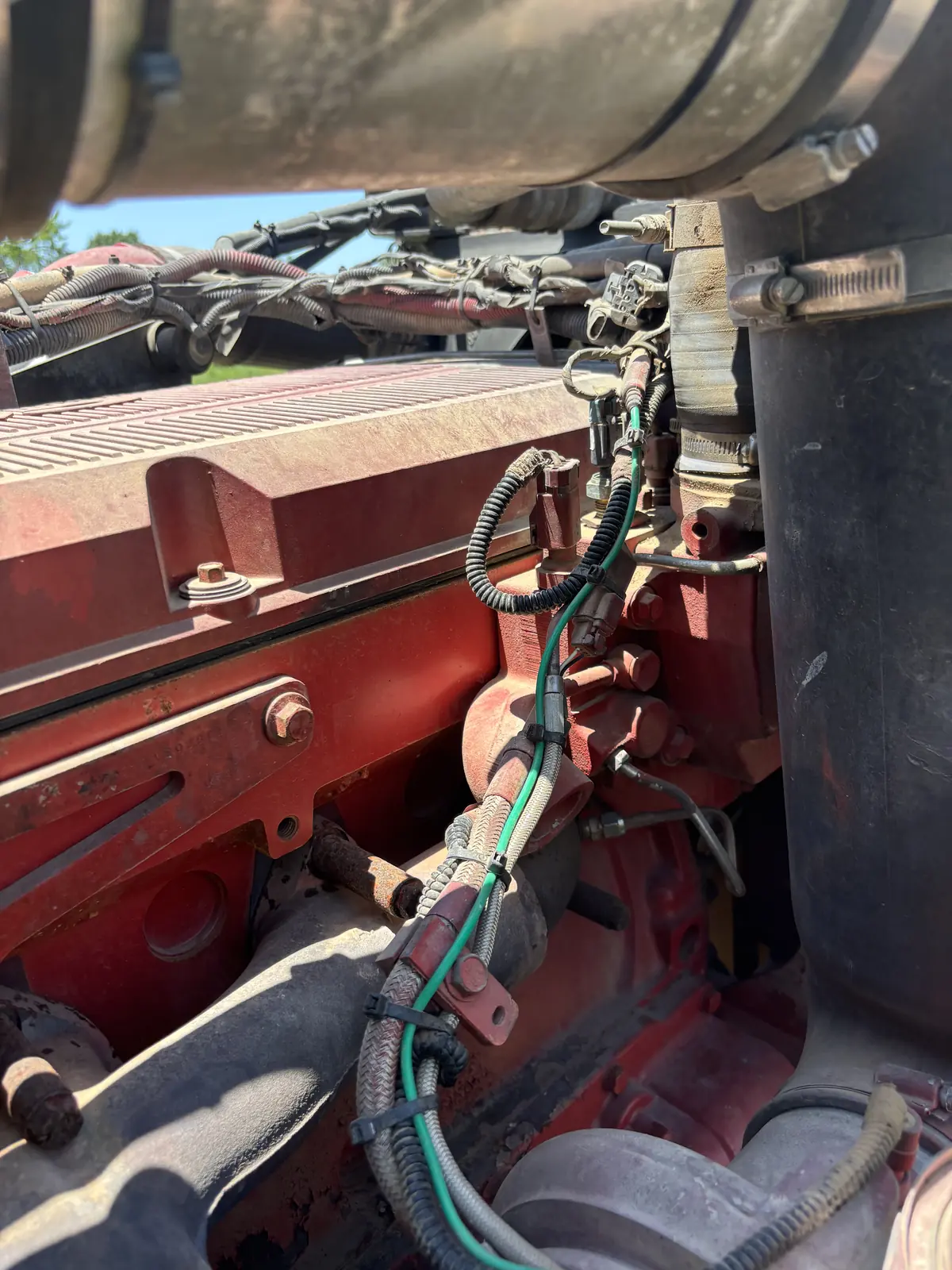
When Tulsa settles into its July and August stretch above 100°F, five things fail more than anything else: cooling systems, batteries, air conditioning, tires, and hydraulic oil on equipment. Every one of them gives warning in May if someone looks. Here is what actually breaks in the heat, why, and what a pre-summer PM visit should cover.
1. Cooling System
A cooling system rejects heat in proportion to airflow and the temperature difference between the coolant and the air. At 105°F ambient the difference shrinks and every marginal part is exposed at once. The usual suspects:
- Fan clutch. A viscous clutch should roar on a hot engine and should not freewheel more than a turn or two when spun by hand right after a hot shutdown. On Class 8 trucks the air-actuated clutch (Horton, Kysor) must lock in on coolant temperature and on A/C high-side pressure; an electronically controlled clutch can be commanded on with a scan tool. A clutch that will not engage overheats the truck only on the hottest day of the year, which is why it gets missed.
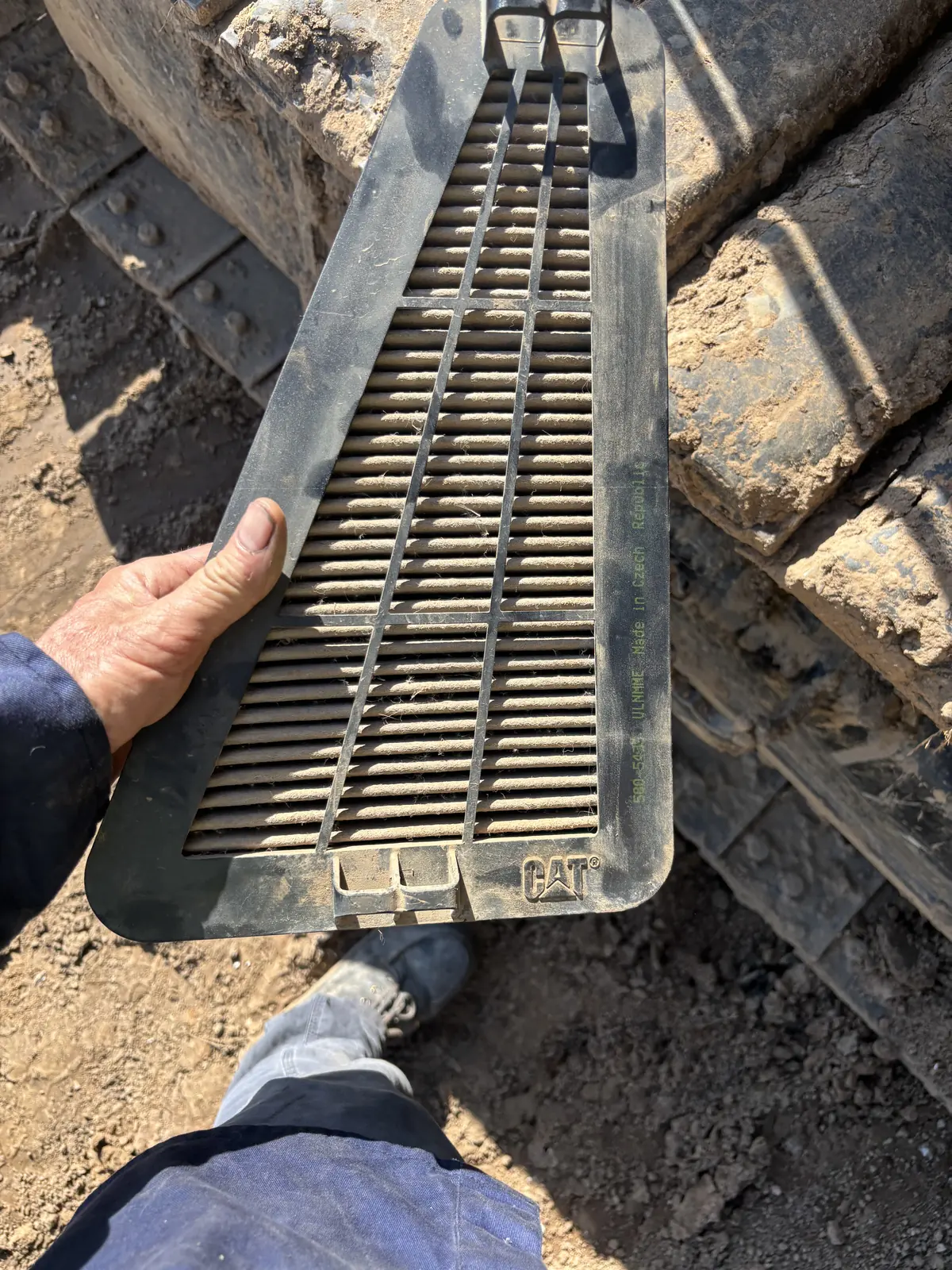
- Packed cooling stack. Cottonwood fluff in May and June, then red dust, and on ag equipment chaff. It packs between the A/C condenser, charge-air cooler, and radiator where a glance at the grille shows nothing. Blow it out from the engine side forward with the shrouds pulled.
- Coolant concentration. Check with a refractometer, not floating balls. Fifty-fifty glycol and water protects to about -34°F and, under a good 15 psi cap, boils well above 250°F. Over-concentrated coolant (70 percent and up) carries heat worse than water does; straight water boils early and offers no liner protection. Do not mix OAT extended-life coolant with conventional, and on wet-liner heavy-duty engines test SCA levels or the liners pit.
- Pressure cap and leaks. A cap that holds 8 psi instead of 15 drops the boiling point. Pressure-test the system and the cap. Look at hose clamps, the water pump weep hole, and the EGR cooler, which adds real heat load on modern engines and whose failure shows as coolant loss with white, sweet-smelling exhaust. On the 6.0 Powerstroke a plugged oil cooler starves the EGR cooler and takes it out.
- Belts and tensioners. A glazed belt slips exactly when the A/C compressor and fan load it hardest.
2. Batteries
Heat kills batteries; winter just finds the bodies. High under-hood temperatures speed up grid corrosion and boil off electrolyte in flooded batteries, and an alternator that is overcharging at 120°F under-hood temperature finishes the job. A battery that made it through February often will not make it through August. Test before summer with a conductance tester or a load test (half the CCA rating for fifteen seconds; it should hold at least 9.6 volts at 70°F). Check charging voltage at 13.8 to 14.4 volts. On Class 8 trucks with three or four batteries in parallel, one weak battery drags the rest down; replace them as a set. Clean terminals, tighten hold-downs on equipment that lives on rough jobsites, and use the battery disconnect on machines that sit.
3. Air Conditioning
System pressures rise with ambient temperature. At 100°F a high-side reading in the 250 to 300 psi range is ordinary, and a condenser packed with dirt pushes it higher until the high-pressure switch cycles the compressor off. That is the classic summer complaint: it cools on the highway and quits in traffic on the Broken Arrow Expressway. Clean the condenser first. Then check clutch engagement and gap, look for oily residue at hose crimps and O-ring joints (heat hardens the O-rings), check the cab air filter, and run a performance test: gauges on both sides and a thermometer in the center vent at high idle with the doors closed. On heavy trucks a fan clutch that will not engage on high-side pressure is an A/C problem as much as a cooling problem. Operators running a 100°F cab all day make mistakes, so this is a safety item.
4. Tires
Asphalt on the Turner and Creek turnpikes runs far hotter than the air, and heat is what turns underinflation into a blowout. An underinflated tire flexes more, flexing makes heat, and heat separates tread from casing. Check pressures cold, in the morning, against the load and inflation table for the tire, not the number on the sidewall. Duals must match; a few psi difference shifts the load onto one tire. Look for weather-checking, sidewall bulges, and irregular wear that points at alignment or a bad shock. Tread depth minimums under 49 CFR 393.75 are 4/32 inch on steer tires and 2/32 inch elsewhere, and CVSA inspectors check them during Roadcheck every summer. Torque lug nuts after any wheel has been off. Foam-filled and solid tires on skid steers and telehandlers do not blow out, but they chunk on hot rock and gravel.
5. Hydraulic Oil Overheating on Equipment
Hydraulic oil above roughly 180°F oxidizes, forms varnish, hardens seals, and thins to the point that pumps and cylinders leak internally and make still more heat. In Oklahoma summers that spiral starts from a hydraulic cooler blinded by cottonwood and dust, a fan drive that is not doing its job, oil of the wrong viscosity for the ambient, a relief valve dumping because an attachment is undersized for the circuit, or a mulcher head or hammer running at relief pressure all day. Point an infrared thermometer at the tank during a hot afternoon. If it is over 180°F, clean the cooler, confirm the oil grade against the manufacturer's chart for 100°F operation, and find where the heat is coming from before a pump fails.
Pre-Summer Checklist
| System | Check in May or early June |
|---|---|
| Cooling | Pressure-test system and cap; refractometer on coolant; fan clutch engagement; blow out the full stack; belts, tensioners, hoses, water pump weep hole |
| Batteries and charging | Conductance or load test every battery; charging voltage; clean and tighten terminals and hold-downs |
| A/C | Clean condenser; clutch gap; leak check at joints; cab filter; gauge and vent-temperature performance test |
| Tires | Cold pressures to the load table; match duals; tread depth; sidewall and irregular wear; lug torque |
| Hydraulics | Clean cooler; oil level and condition; oil grade for summer; filter; tank temperature under load |
| Also | Air filter after a dusty spring; engine oil at spec grade; DEF fresh (it degrades faster above 86°F); biocide check on stored fuel |
What a Pre-Summer PM Visit Looks Like
There is no special program to sign up for. A preventive maintenance visit in late spring is a regular PM with the list above worked through on every unit in the yard: cooling system pressure and coolant tests, battery and charging tests, an A/C performance check, tire pressures and tread, and a hydraulic cooler cleaning and temperature check on equipment. Anything marginal gets fixed there or scheduled, and the units go into July with the weak parts already replaced instead of failing on a jobsite in Catoosa at 3 p.m. in August.
FAQ
What coolant temperature is too hot for a diesel?
Most run 180 to 210°F. A gauge climbing past 220°F and not coming back down means stop and find out why; running it there cooks head gaskets and, on aluminum-head engines, the heads.
Should I install a cooler thermostat for summer?
No. A thermostat sets the minimum operating temperature, not the maximum. If the truck runs hot with the thermostat wide open, the problem is airflow, coolant condition, or heat load, and a colder thermostat hides it.
Do AGM batteries handle heat better?
They tolerate vibration better and do not lose water, but heat shortens their life the same way. Keeping any battery out of direct under-hood heat matters more than the type.
Need This Done On-Site in Tulsa?
Tulsa Fleet Repair is a mobile operation for trucks and construction equipment. The service truck comes to your yard, jobsite, or breakdown location anywhere within 120 miles of Tulsa, with 24/7 emergency response when a unit can't wait. Call (918) 925-9356 or request service online.