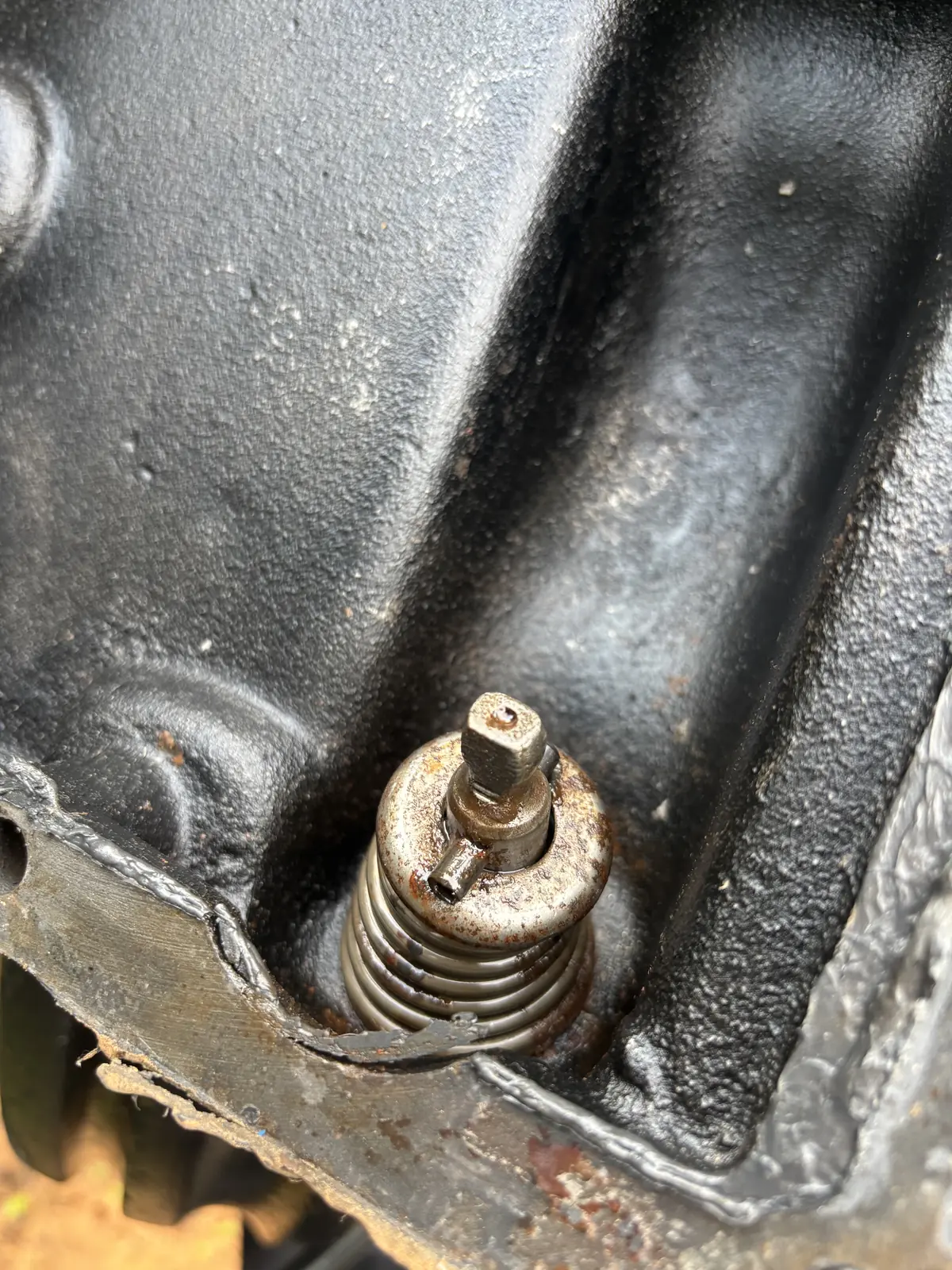
A wheel bearing on a work truck does not fail all at once. It fails in a sequence that starts with a leaking seal and ends, if nobody catches it, with a wheel and hub leaving the truck at highway speed. Every stage in between has a symptom you can hear, feel, or measure. This guide walks through the chain, the checks at each PM, the bearing adjustment procedure that prevents most of it, and the two lube systems you will find on trucks around Tulsa.
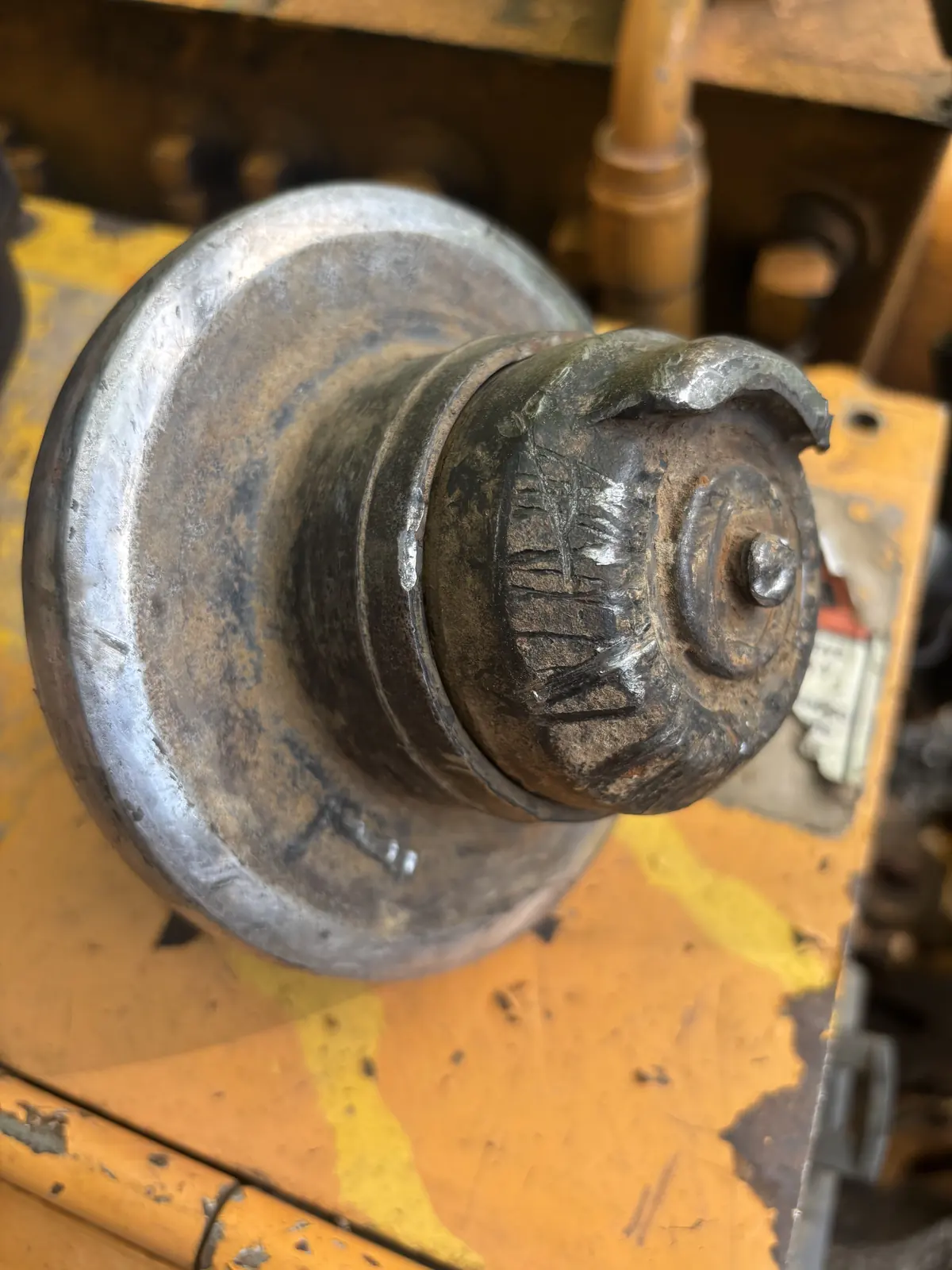
The Failure Chain
- Seal leak. The hub seal dries out, gets cut on installation, or is damaged by a bearing that is already loose and letting the hub wobble. On an oil-bath hub the oil level drops; on a grease hub the grease slings out onto the brake drum.
- Lube loss. With the oil below the bearings, the rollers run on a thinning film. On a drive axle, the hub is lubricated by differential oil, so a leaking wheel seal drains the axle at the same time; a bad inner seal there can end in a differential failure too.
- Heat. Friction climbs, the hub gets hot, the lube that is left oxidizes and thickens, and the bearing preload changes as the metal expands. This is the stage where a hand on the hub or an infrared thermometer finds it.
- Spalling. Metal flakes off the rollers and races. The bearing gets noisy, end play grows, and the hub starts to wobble, which finishes the seal.
- Seizure or wheel-off. The bearing welds itself to the spindle and locks the wheel, or the spindle nut and its retainer give up and the wheel, hub, and drum leave the truck. A wheel-off event is the catastrophic case: it can cross the median on US-75 at 70 mph, and the axle spindle is usually destroyed along with everything on it.
Symptoms by Stage
| Stage | What the driver notices | What a mechanic finds |
|---|---|---|
| Seal weep | Nothing | Oil film on the inside of the wheel or on the drum; hub oil below the sight-glass line; grease on the backing plate |
| Early wear | Faint hum that changes with speed, not engine rpm; may change when swerving left or right | Slight roughness turning the wheel by hand; end play at the edge of spec |
| Heat | Hot smell after a run; ABS light on some trucks as the tone ring moves | One hub noticeably hotter than its mate on the same axle; darkened hub cap; discolored oil |
| Spalling | Growl or grind, vibration in the wheel or seat, wander | End play well beyond spec; metal in the hub oil; play felt by rocking the tire top to bottom |
| Failure | Loud grinding, pull, smoke, wheel lock | Blued spindle, welded bearing, broken retainer |
Temperature check
After a highway run, hub temperatures across an axle should be close to each other. Shoot each hub cap with an infrared thermometer; a hub that reads much hotter than the other side of the same axle, or that is too hot to keep a hand on, needs to be opened up. A dragging brake will also heat a hub, so check the drum temperature at the same time to separate the two.
End-play check
Jack the axle, mount a dial indicator on the hub with the plunger against the end of the spindle, and push and pull the hub. The spec for a conventionally adjusted heavy-duty wheel end is 0.001 to 0.005 inch of end play. Zero end play (a preloaded bearing on a wheel end that is not designed for it) runs hot; more than 0.005 inch lets the hub wobble and starts the seal-failure chain. On a light-duty truck, rock the tire top and bottom with the wheel lifted; any perceptible play in a unitized hub bearing means replacement.
Bearing Adjustment: The TMC RP 618 Procedure
Most premature heavy-duty wheel-end failures trace back to a bearing that was set by feel. The Technology and Maintenance Council's Recommended Practice 618 is the industry procedure and it takes a torque wrench, not a feel:
- Lubricate the bearings and install the hub. Tighten the adjusting nut to 200 ft-lb while rotating the wheel to seat the bearings.
- Back the adjusting nut off one full turn.
- Retighten to 50 ft-lb while rotating the wheel.
- Back the nut off the amount the nut style calls for: a quarter turn for a double-nut system, less for single-nut systems (follow the nut manufacturer's instruction).
- Install the lock and jam nut and torque the jam nut to spec (commonly 200–300 ft-lb for smaller spindles and 300–400 ft-lb for larger).
- Verify end play with a dial indicator: 0.001 to 0.005 inch. If it is outside that range, start over.
Pre-adjusted hub systems and unitized light-duty hubs are different: they are torqued to a single spec and not adjusted at all. Know which you have before touching the spindle nut; most 3/4- and 1-ton 4x4 pickups use a bolt-on unitized hub that is replaced as an assembly.
Lube: Oil Bath vs. Semi-Fluid Grease
- Oil bath (most tractor steer axles and trailers): a clear hub cap with a sight glass and a fill plug. Check the level at every PM and every pre-trip; it should sit between the marks with the truck level. Low means a seal leak, since the oil has nowhere else to go. Use the gear oil the axle maker specifies, usually a 75W-90 or 80W-90, and change it when it looks milky (water) or dark (heat) and at the interval in the manual.
- Semi-fluid grease (many trailers and some straight trucks): an NLGI 00 grade grease that stays put with a damaged seal better than oil and does not need a sight glass, but you cannot see the level. It gets inspected by pulling the hub cap at PM, and the wheel end is typically opened and repacked at a longer interval set by the axle maker.
- Drive axles: lubricated by the differential oil that runs out through the axle tubes into the hubs. The differential level is the hub level. An axle that keeps needing oil has a wheel seal leaking somewhere.
Inspection Interval
- Every pre-trip: hub oil levels through the sight glass; look for oil on the inside of the wheels; feel the hubs at the first stop.
- Every PM (quarterly or every 15,000–25,000 miles for trucks in local service): temperatures with an IR gun, seal inspection, end play check on any hub that is suspect, ABS tone rings and sensors. Jobsite and oil-field trucks that run through standing water and red clay need the seal check more often.
- Every brake job: the hub is already off. Clean, inspect the bearings and races for spalling and discoloration, replace the seal regardless of how it looks, and adjust per RP 618.
- Annually: hub oil change on oil-bath wheel ends; verify adjustment on every wheel end during the annual inspection.
FAQ
Can a wheel bearing be replaced on-site?
Yes. Steer, drive, and trailer wheel ends can be serviced from the service truck at your yard or at the breakdown, including seals, bearings, races, hub oil, and adjustment with a dial indicator. Light-duty unitized hubs are a straightforward mobile job. See emergency repair for the roadside side of it and preventive maintenance for the inspection side.
Should the bearing be replaced if only the seal leaked?
If it was caught early, the oil is clean, and the bearing and races show no discoloration or flaking, a new seal and correct adjustment is enough. Any bluing on the rollers or pitting on the race means replace both the cone and the cup as a set.
Need a Wheel End Checked On-Site in Tulsa?
Tulsa Fleet Repair is a mobile operation — the service truck comes to your yard, jobsite, or breakdown location anywhere within 120 miles of Tulsa, with 24/7 emergency response when a unit can't wait. Call (918) 925-9356 or request service online.